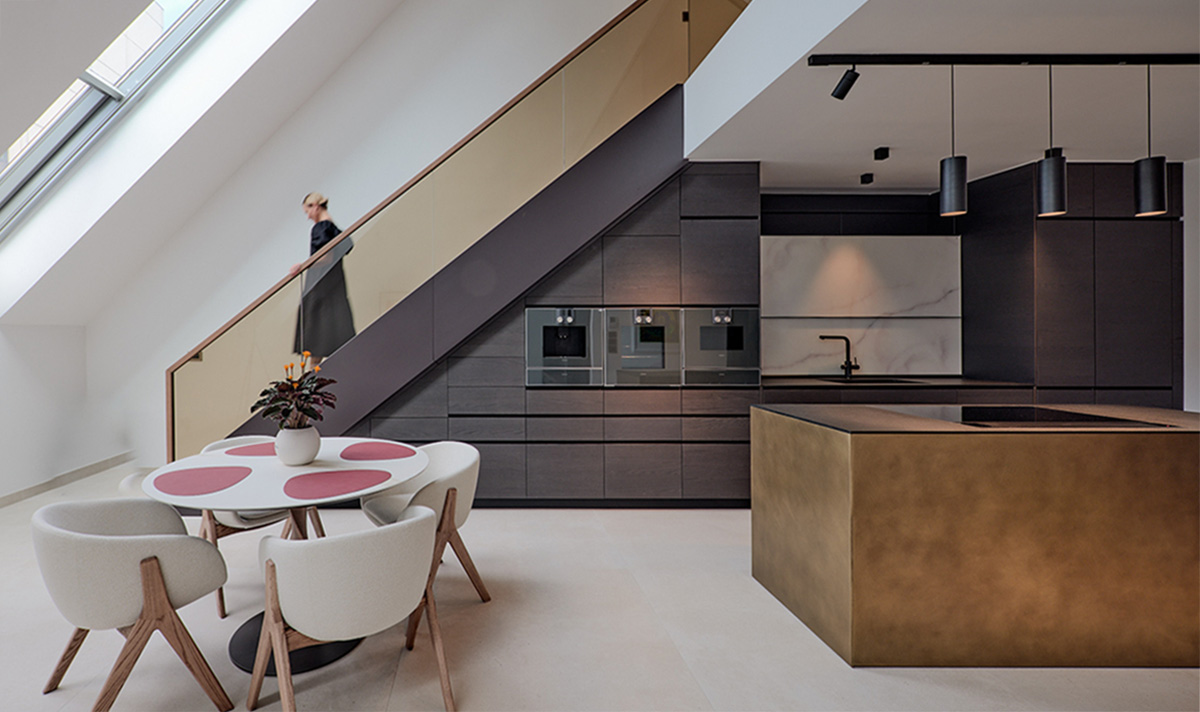
Budapest: the kitchen as architecture
In Budapest, a fully renovated two-level loft set within a historic building in the heart of the city—just a short walk from the Danube—revealed remarkable architectural potential. Yet the original layout was highly fragmented, preventing the space from expressing its true quality.
Our local dealer partner, EstoriO, completely rethought the interiors to create a broader, more fluid environment. The renovation opened up volumes, simplified connections, and introduced a new staircase developed along a continuous wall—a defining gesture that becomes the backbone of the home. Together with the kitchen composition designed by EstoriO in collaboration with Adrienn Laki Interior Design, the staircase establishes the new centre of the apartment.
The homeowner was looking for long-lasting performance, easy maintenance, sustainability, and everyday practicality—without giving up a distinctive identity. A passionate cook, he wanted the kitchen to take a central role in domestic life.
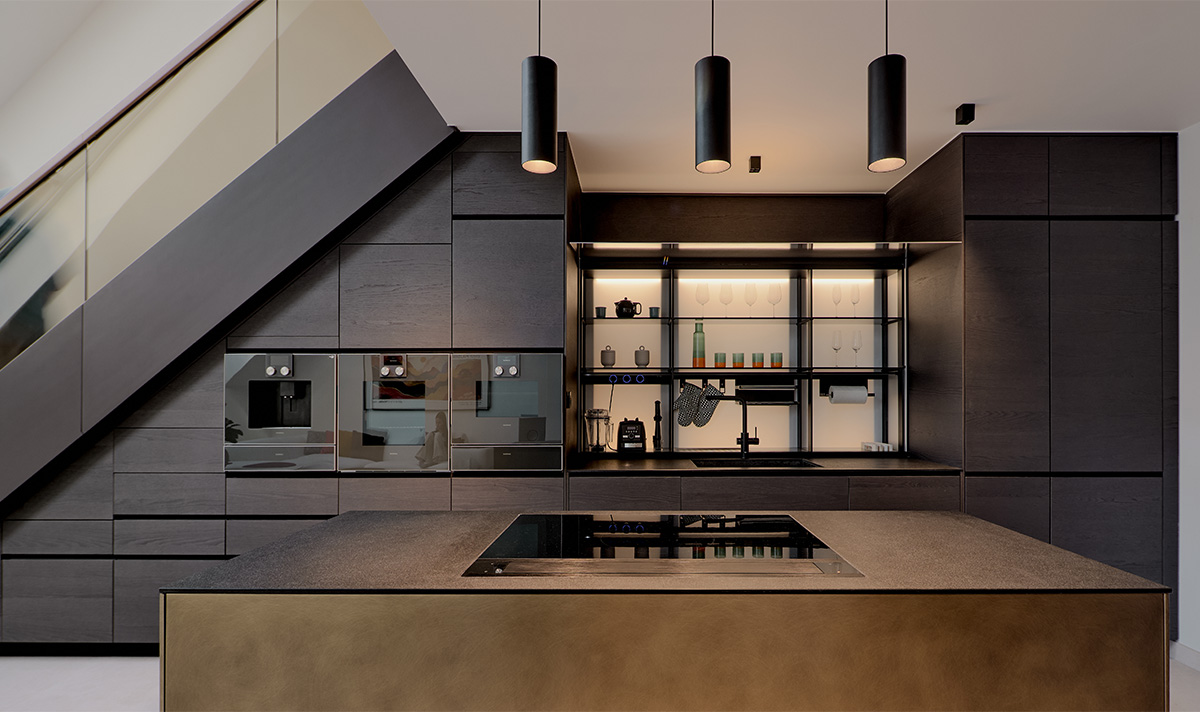
The main challenge lay in integrating the kitchen into the architecture itself. The composition unfolds beneath the staircase, negotiating curved lines, sloping planes, and extremely specific dimensions. The structure's geometry called for precise surveying, accurate shaping, and meticulous coordination, so every detail could feel natural and coherent. Ergonomics played a decisive role as well: working heights were calibrated to the client's stature, turning constraints into a highly personalised solution—where storage, operational flows, and circulation are fully integrated with the architecture.
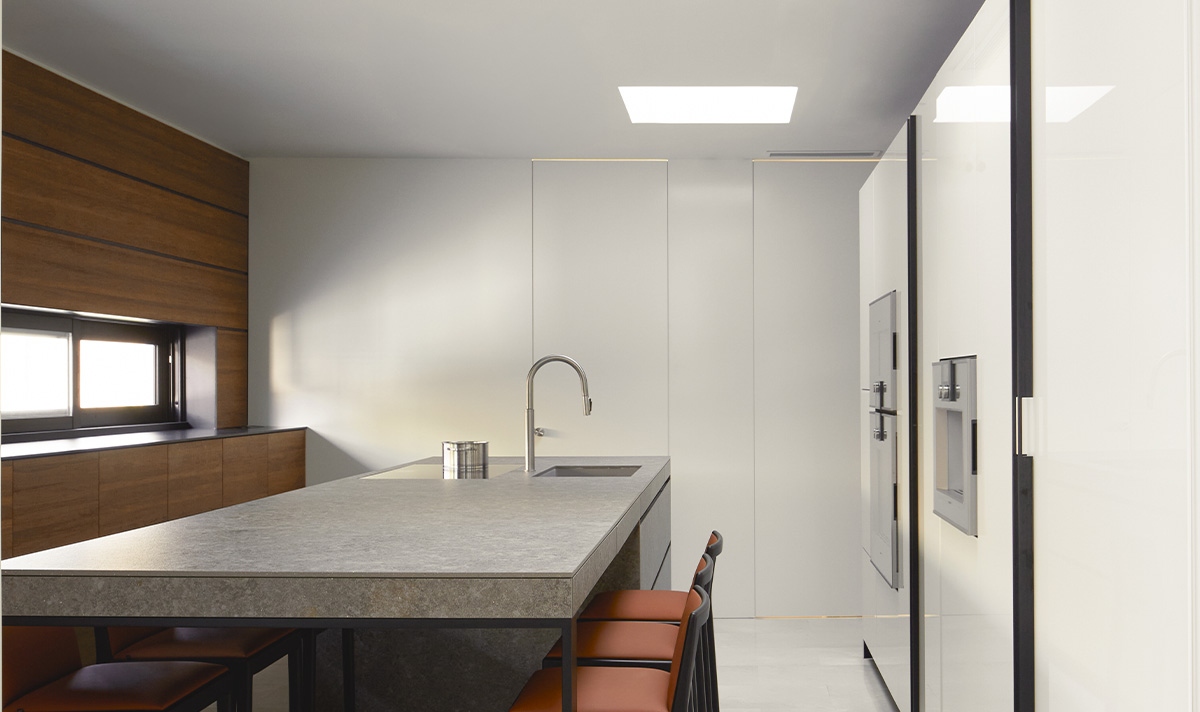
The kitchen is not conceived as a separate unit, but as an integral part of the architectural concept. The goal was a clean, restrained yet highly efficient space—able to fit into the room's complex geometry and support daily use—while maintaining an essential, refined presence.
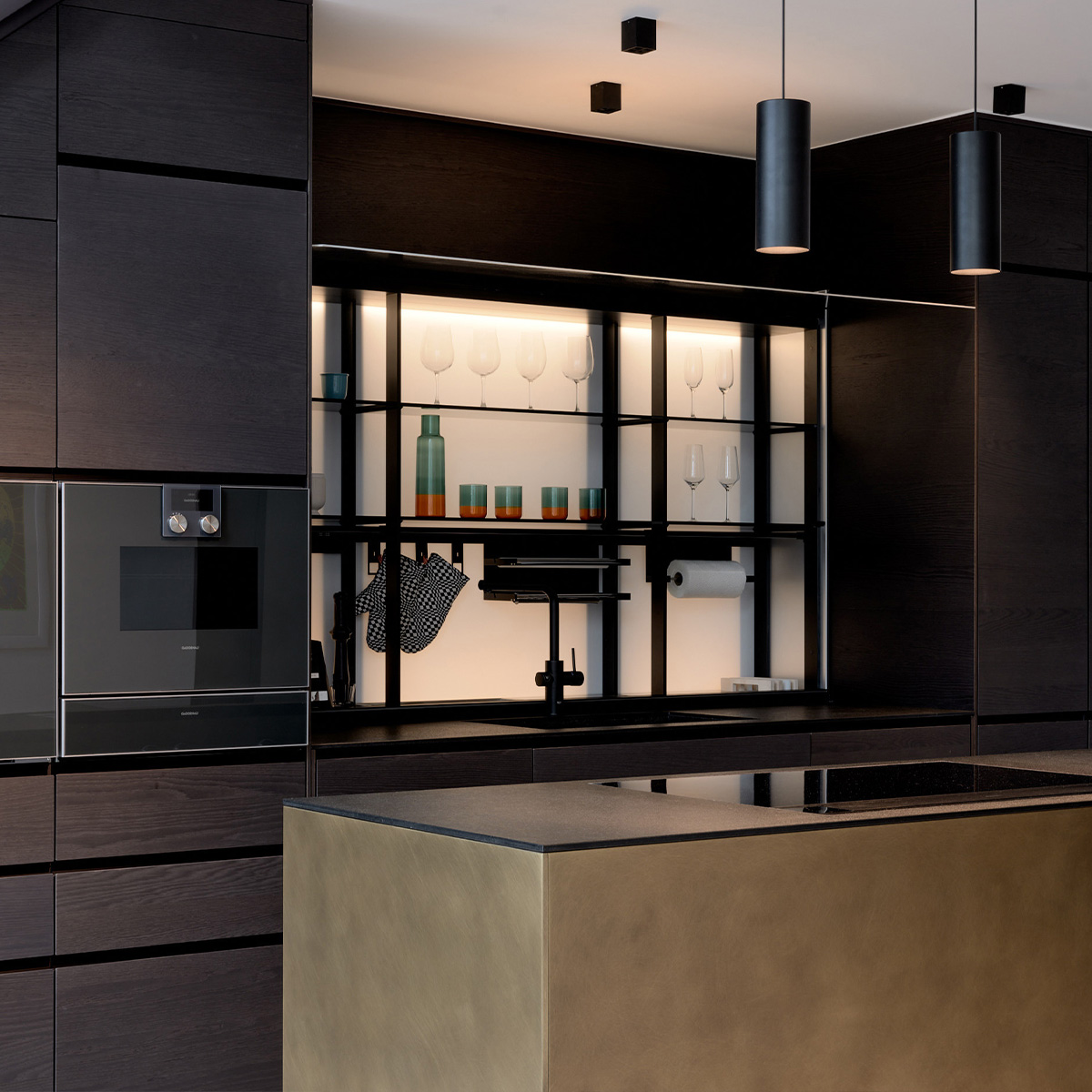
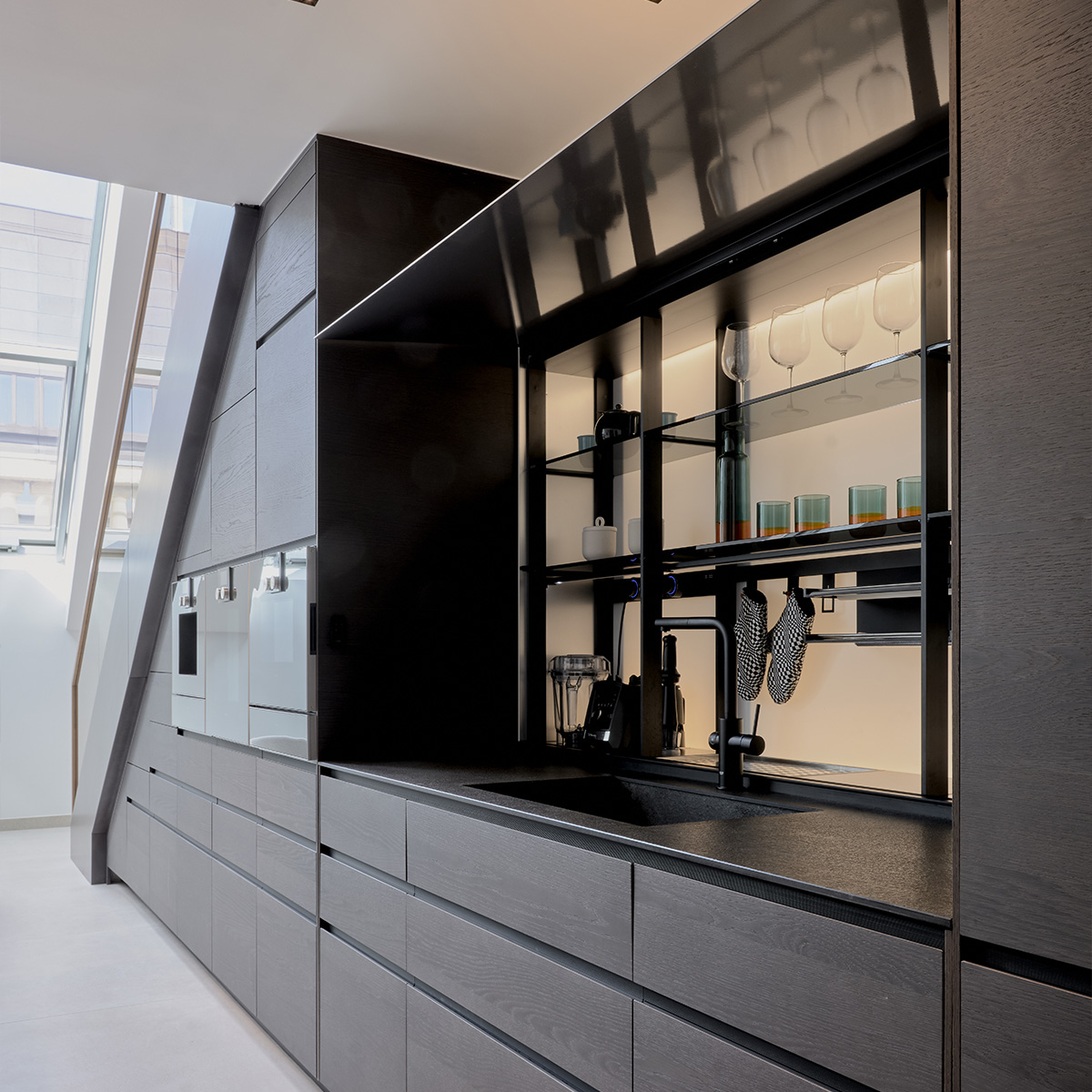
Set within the niche beneath the staircase, the New Logica Special Element responds to the geometry of the space, enhancing ergonomics and efficiency. The result is a compact, highly organised system—able to remain clean and minimal when closed, and to integrate naturally into the living area when open. A precise balance, where nothing is left to chance.
“Our goal was to support the architectural concept not only with a product, but with a complete and carefully coordinated process—from design to installation—so that every detail would work both technically and spatially.” EstoriO
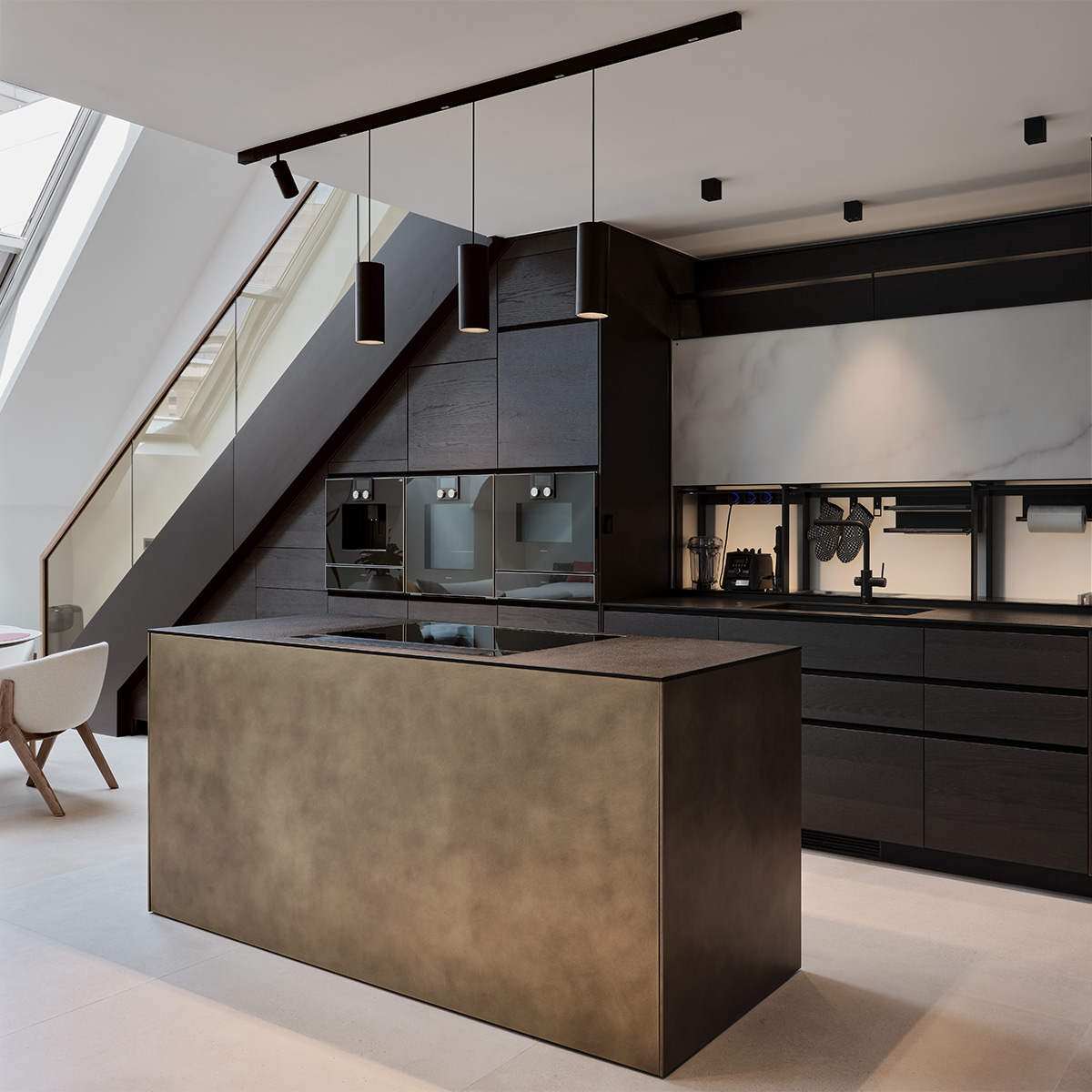
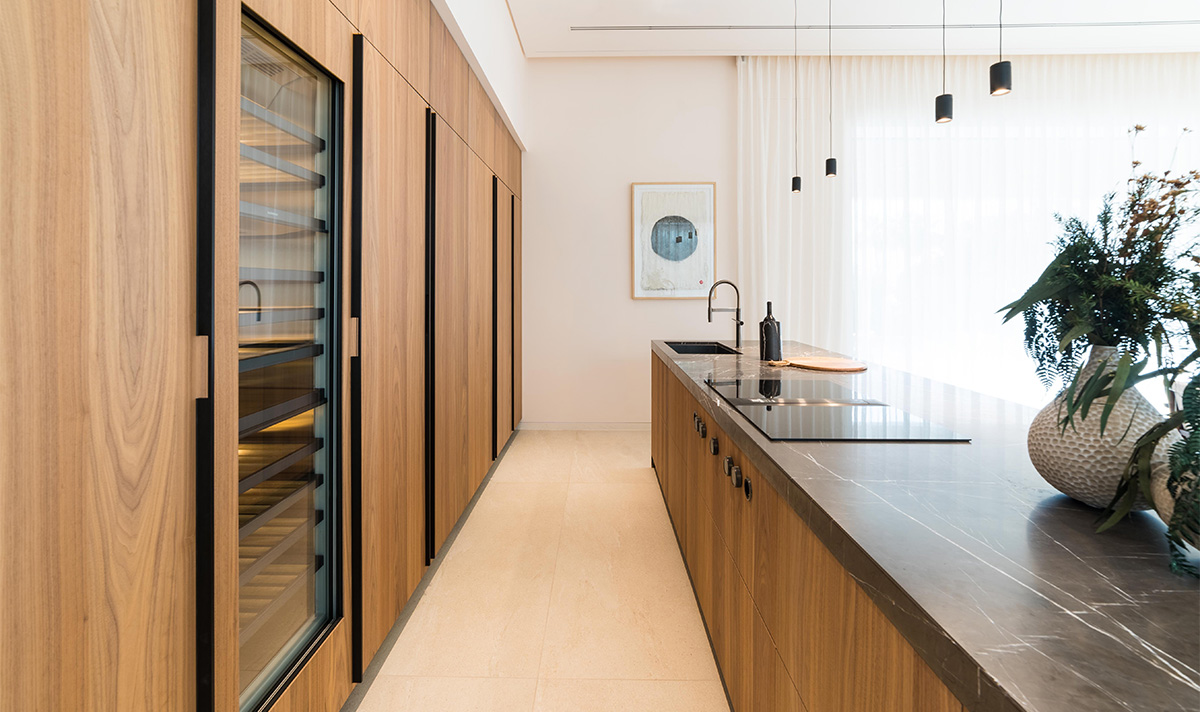
The material palette reinforces this architectural clarity with a refined, harmonious contrast. Tactile Oak fronts introduce warmth, depth, and a natural grain that softens the minimal lines, while Vitrum Mimesis White Onyx adds a luminous, mineral counterpoint that catches the light with quiet elegance. The work area is anchored by an Absolute Black flamed-brushed granite top—dense, durable, and deliberately understated—chosen for long-term practicality and easy maintenance. At the center, the island becomes a sculptural element in its own right: fronts and side panels wrapped in Precious Metal Distressed Brass, giving the composition a subtle masculine intensity—confident, crafted, and never loud.
In this project, the kitchen does more than define a function: it becomes a design tool. It clarifies the space, resolves complex constraints, and improves the quality of everyday gestures. An example of Valcucine integration, where ergonomics and high tailoring transform every limitation into a bespoke, durable solution.
“For me, this project meant turning the kitchen into a true living space, where technology, materials, and proportions naturally converse. The staircase became the backbone of the apartment, and the kitchen had to develop according to this architectural logic, rather than exist as an object on its own.”
Adrienn Laki, Architect
Ph credits: Mr. Zsolt Batár