Company
For over forty years, Valcucine has stood out in the Made in Italy kitchen industry by placing well-being, innovation, sustainability and timeless durability at the heart of its work.
Since 1980, Valcucine has been innovating the way kitchens are experienced and designed. Throughout its history, it has developed a vision of the kitchen as a system integrated into architecture, where design goes beyond the product to create value through research, intelligent thinking and quality. This vision has led the company to continually rethink elements, materials and ways of use, while always looking to the future.
Today, Valcucine is represented in more than 285 showrooms worldwide, including 30 Ateliers, across Europe, the United States, the Middle East, India, Southeast Asia and South Africa.
Well-being
Every collection is designed around people, their well-being and their needs, creating products that contribute to the pleasure of everyday living. The company has always stood out for its focus on ergonomics and the usability of spaces. This approach gave rise to Logica System in the 1990s, an ergonomic system featuring an equipped back section, pull-out deep drawers and wall units with lift-up doors, designed to make kitchen activities easier and keep everything within easy reach. Over time, the evolution of the equipped back section and wall units led to the creation of the New Logica and Air Logica Special Elements: solutions that combine aesthetics and functionality, accommodating kitchen equipment and concealing it whenever required.
Attention to everyday well-being is also expressed through details such as the light panel, designed to enhance the perception of space and offer a greater sense of freedom. In addition to their aesthetic value, the choice of tactile materials introduces a sensory dimension that evokes natural and ancestral sensations.
Sustainability
For Valcucine, sustainability begins with design. The principle of dematerialisation guides research towards solutions capable of reducing the quantity of material used by rethinking the structure of the door, top and carcass. In specific systems, the choice of recyclable materials such as glass and aluminium is combined with design for disassembly and the separation of components at the end of their life cycle. These design choices are complemented by analyses and controls on materials and their emissions, with particular attention to volatile substances and formaldehyde, in accordance with applicable requirements and standards.
Discover the philosophy of dematerialisation
Innovation
Valcucine is synonymous with innovation and, throughout its history, has introduced solutions that have helped transform the kitchen system. With Artematica—the world’s first kitchen featuring a door with a structural aluminium frame invisible from the outside and an aesthetic panel made from stratified HPL laminate just 5 mm thick—Valcucine redefined the very concept of the kitchen door.
With the glass version and Invitrum base units, this research was extended to the structure of the base unit through the use of glass and aluminium, recyclable materials, and a design approach focused on dematerialisation and disassembly. Ricicla was created in the 1990s and later evolved into Riciclantica, the kitchen featuring a door with an aluminium frame and an aesthetic panel just 2 mm thick: one of the most advanced expressions of Valcucine’s research into dematerialisation.
Timelessness
Valcucine designs kitchens conceived to accompany customers throughout their lives, transcending trends and retaining their identity over time. Every kitchen offers extensive design freedom thanks to the variety of elements that can be combined across different collections and the numerous opportunities for customisation through materials, finishes and artisanal techniques.
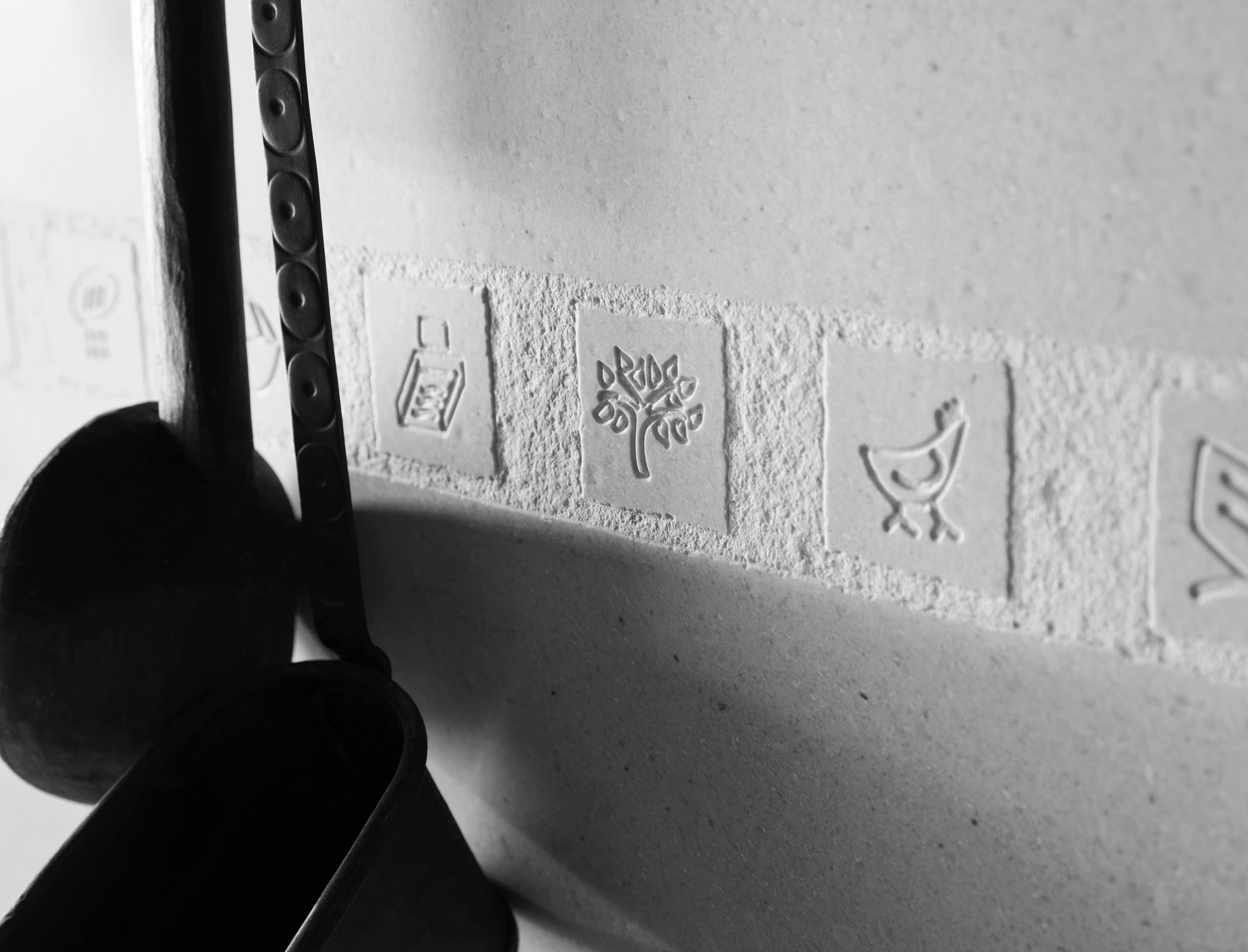
In Genius Loci, the drawer can be customised with inlays, carvings and special finishes, while glass surfaces can be interpreted through Vitrum Arte, an inlay technique that makes it possible to create designs and images on glass. Continuous design research leads to the development of solutions conceived to improve product performance and is complemented by in-depth testing of the materials and technologies used to verify their resistance over time.