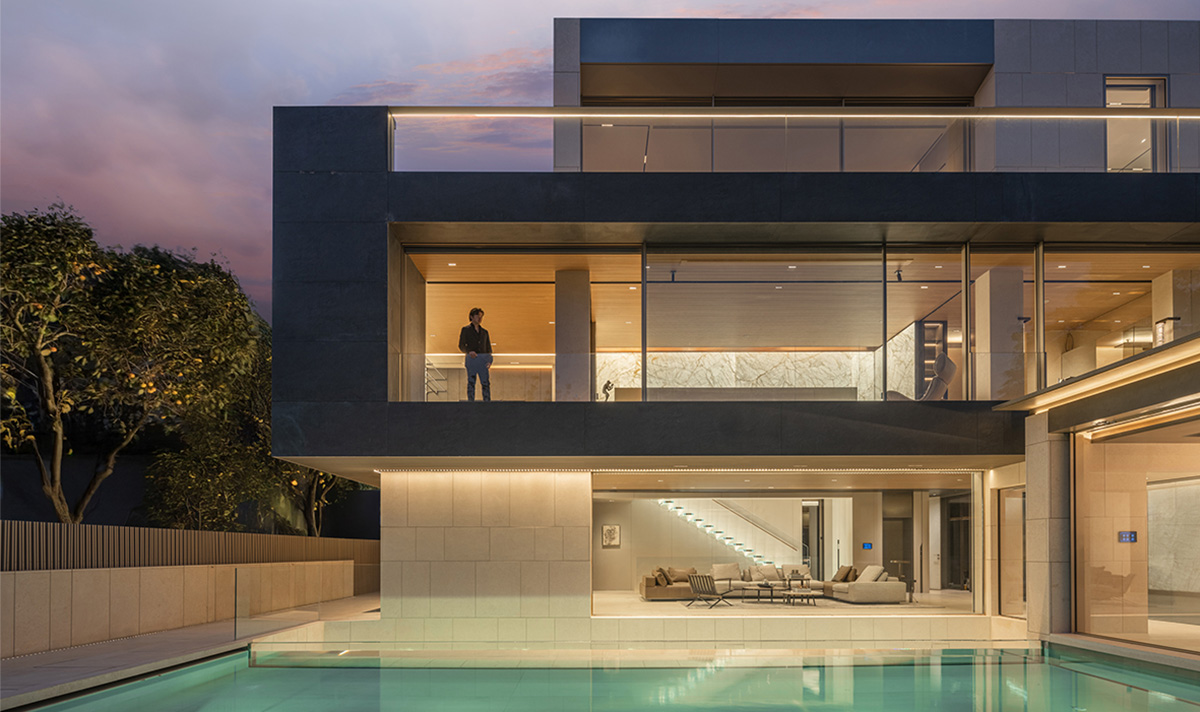
Villa 49: where kitchen, architecture and landscape become one
Villa 49 was conceived as a quiet retreat in the heart of Shanghai: a residence where architecture, landscape and interior design merge into one seamless living experience. The project was designed by interior designer Kris Lin of KLID Kris Lin International Design, who has received more than 1,680 international awards to date. The villa represents the culmination of over thirty years of design research and reflection on the relationship between people, nature and domestic space. A vision that integrates landscape into everyday life and uses technology discreetly, simplifying the complexity of contemporary living.
The residence extends across three levels, with an internal surface area of approximately 1,000 square metres, surrounded by a 300-square-metre garden. The project was shaped around four essential requests from the client: connection with nature, family life, conviviality, and the enhancement of personal collections and passions, creating a complete and deeply fluid domestic environment.
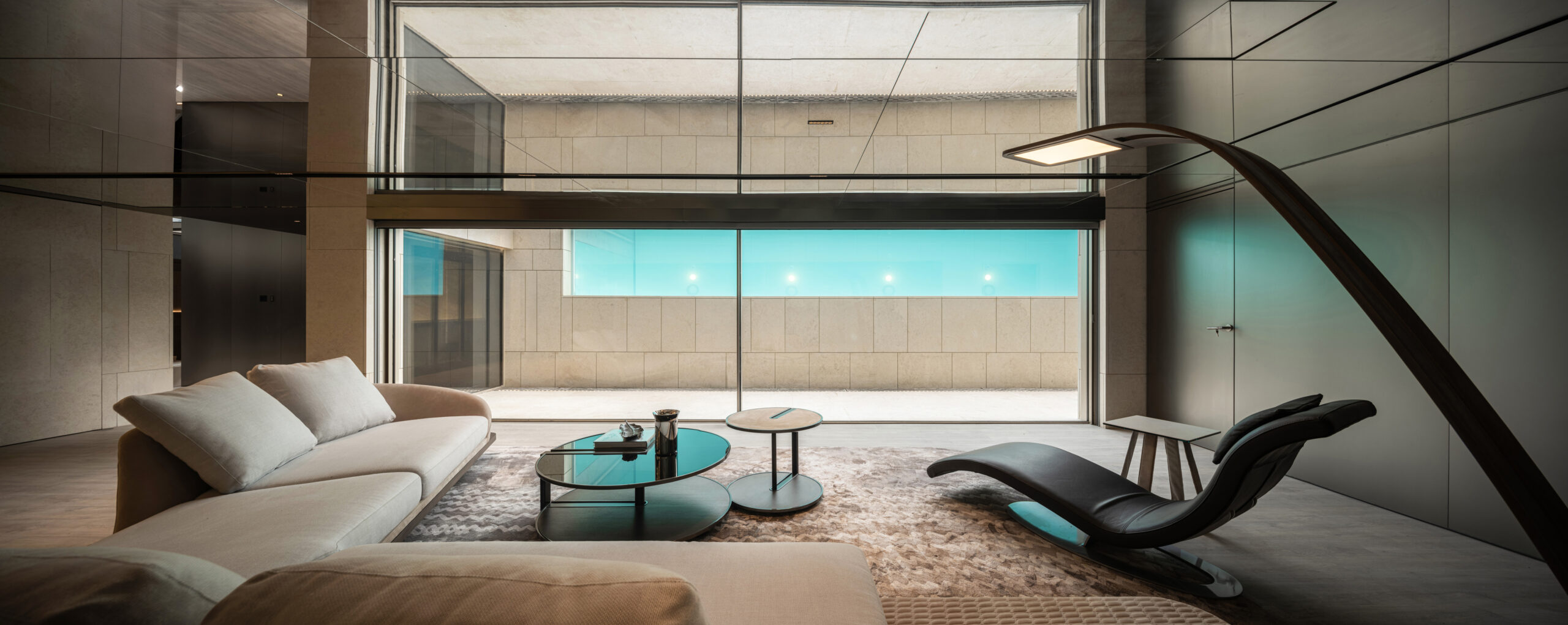
Water is the guiding element throughout the project. Not merely as a scenic feature, but as a living material capable of shaping atmospheres, relationships and everyday rituals. Villa 49 regenerates a brick house built more than twenty years ago, transforming it into a contemporary residence where every space seems to converse with the surrounding landscape.
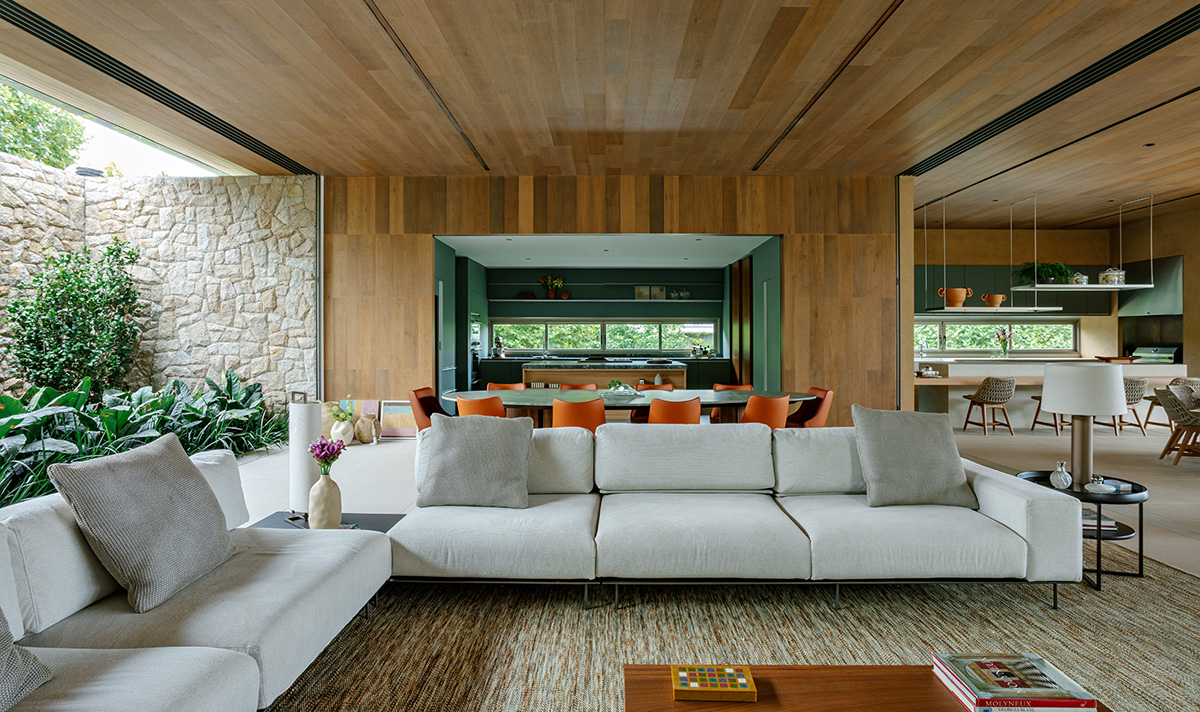
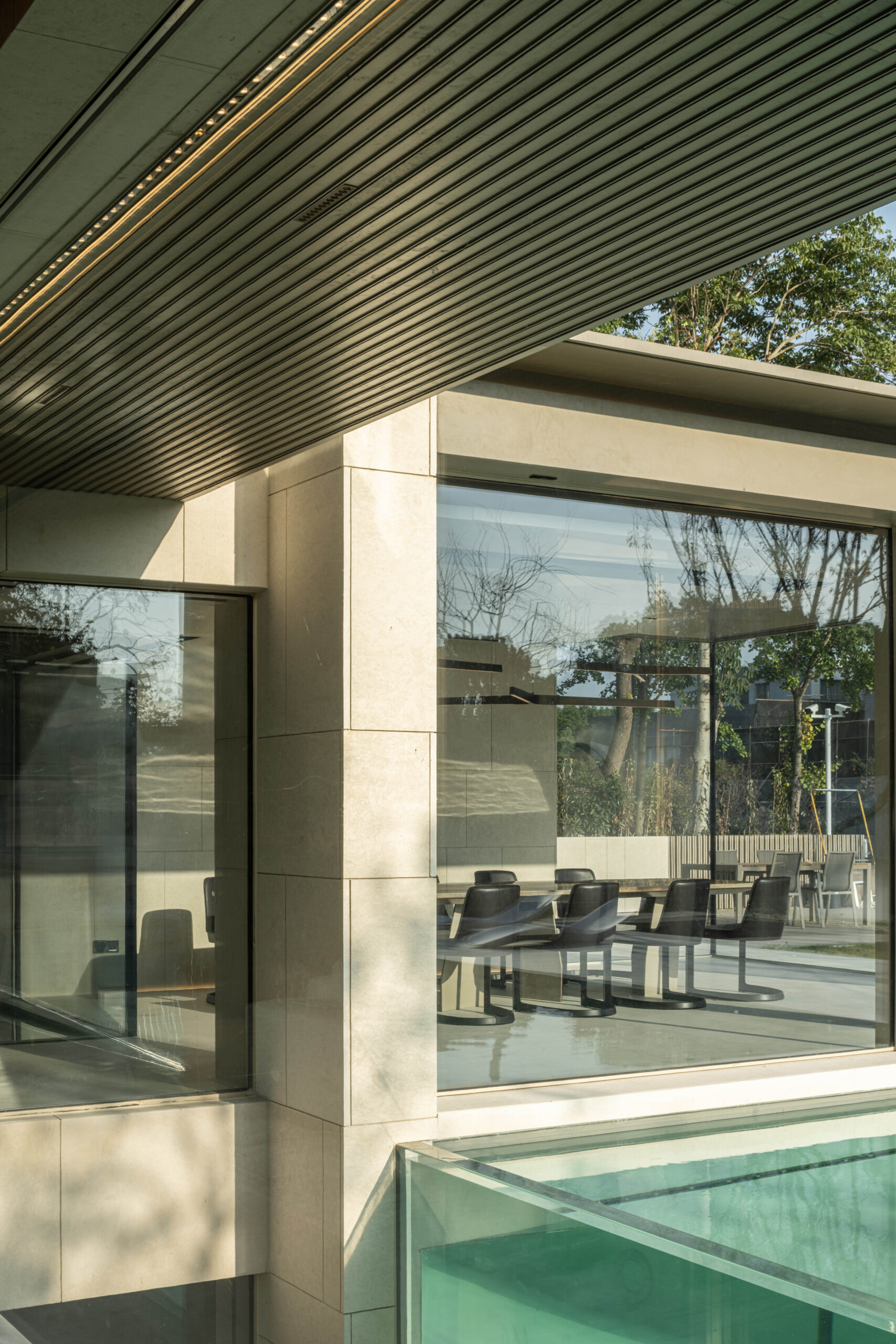
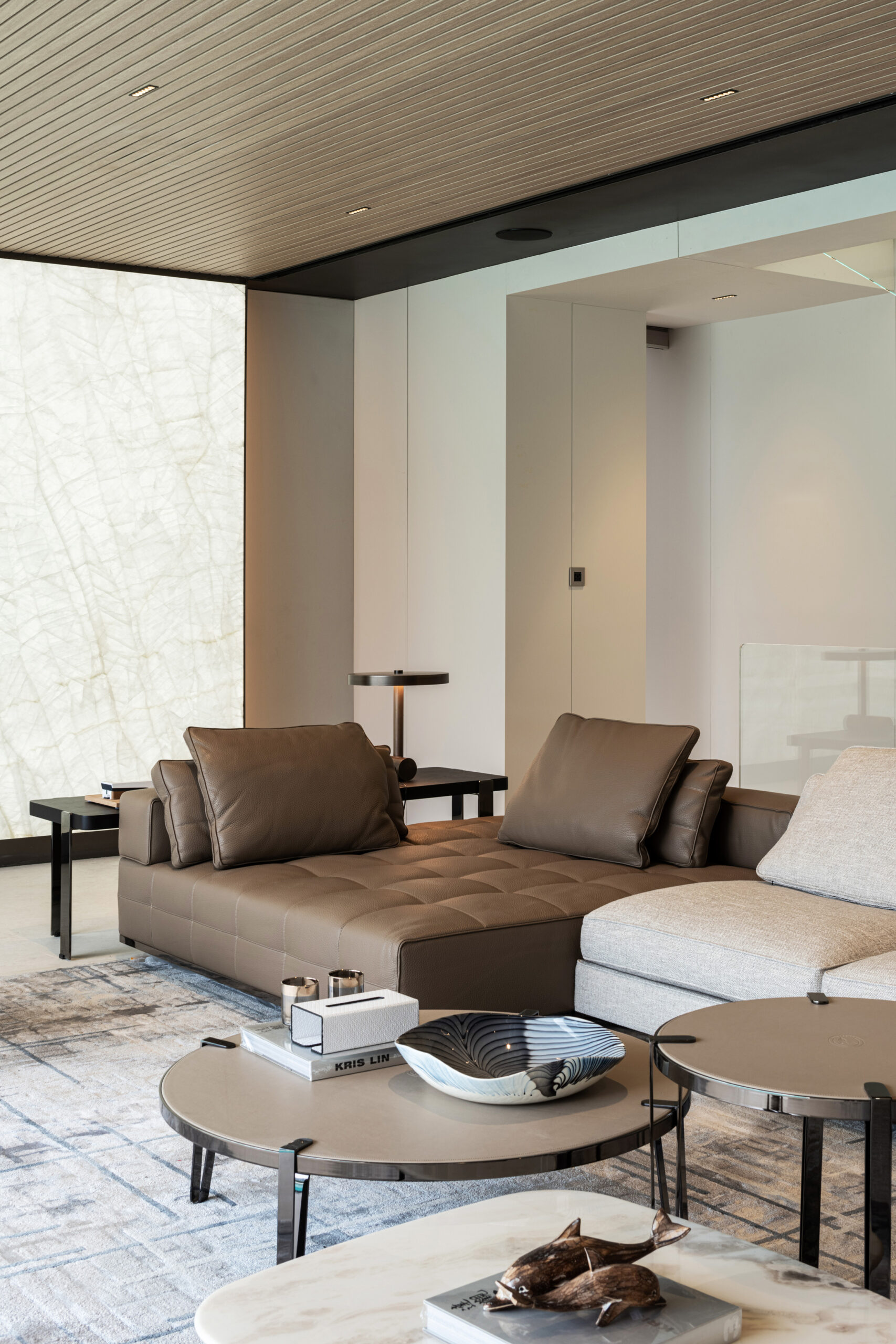
Material continuity further amplifies this perception: the same natural limestone flows across façades, courtyard walls and interior surfaces, dissolving the boundary between architecture and landscape. This is what Kris Lin defines as “disappearing boundaries.” The result is not only aesthetic, but deeply emotional. The house feels calmer, brighter and naturally connected to the riverside landscape surrounding it.
One of the project's most recognisable features is the twelve-metre transparent swimming pool, conceived as an architectural element designed to bring natural light into the heart of the house. Light filters through the water and reaches the lower levels, transforming the basement — originally dark and compressed — into a bright and immersive environment. Skylights, reflective surfaces and mirrored systems amplify the perceived depth and height of the spaces, while reflections from the water create constantly shifting atmospheres throughout the day.
Kitchen as architecture for convivial living
Within this vision, the kitchen becomes the place where everyday rituals take shape and the relationship between interior and exterior reveals itself most naturally. It is not conceived as a separate environment or simply a functional space, but as a quiet architectural presence fully integrated into the language of the home.
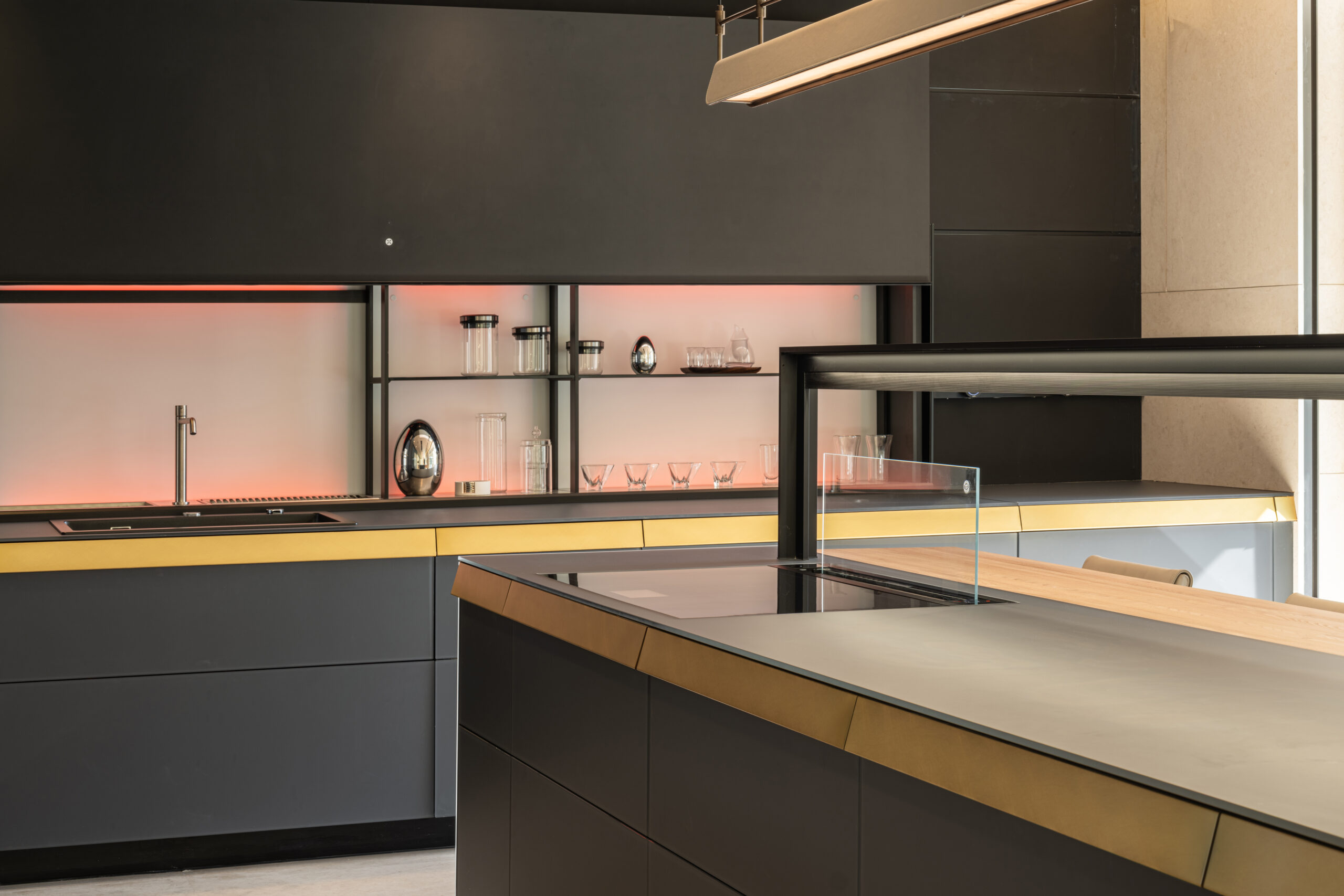
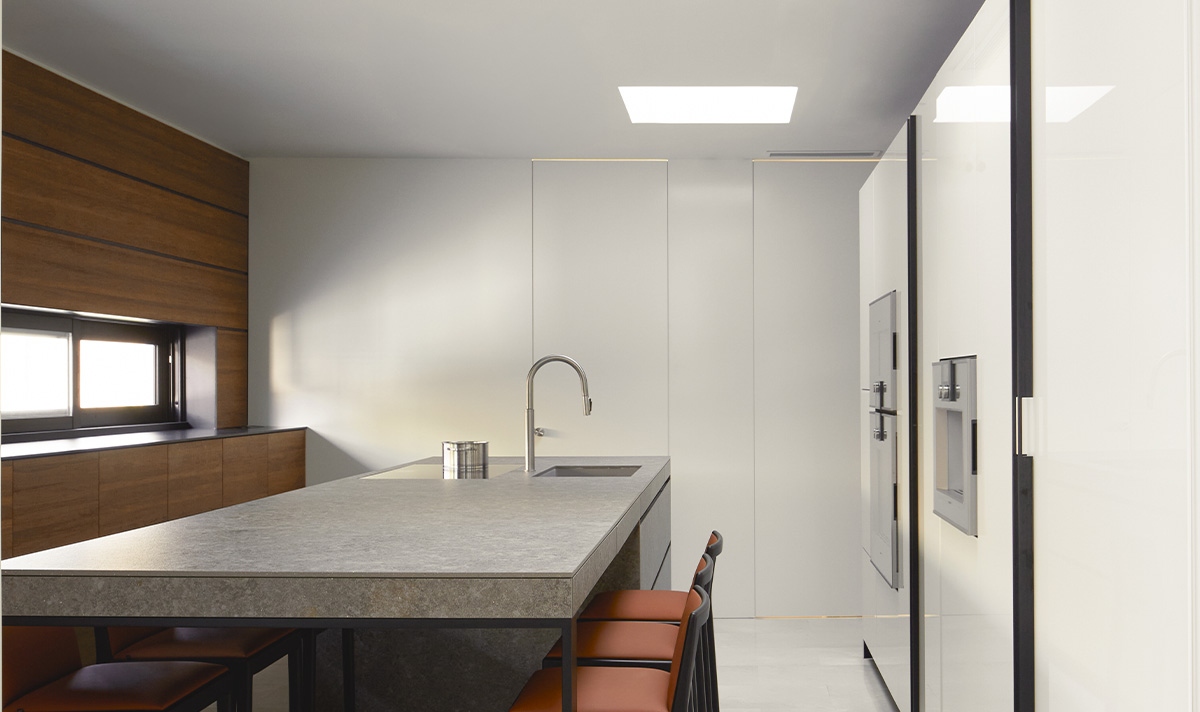
For this project, the local dealer Begin Smart Home Shanghai created the Genius Loci composition. Its distinctive detail is the angled drawer in Antique Brass Precious Metal: a sophisticated tactile feature introducing warmth and material richness into the composition, balancing light and shadow, rigour and naturalness.
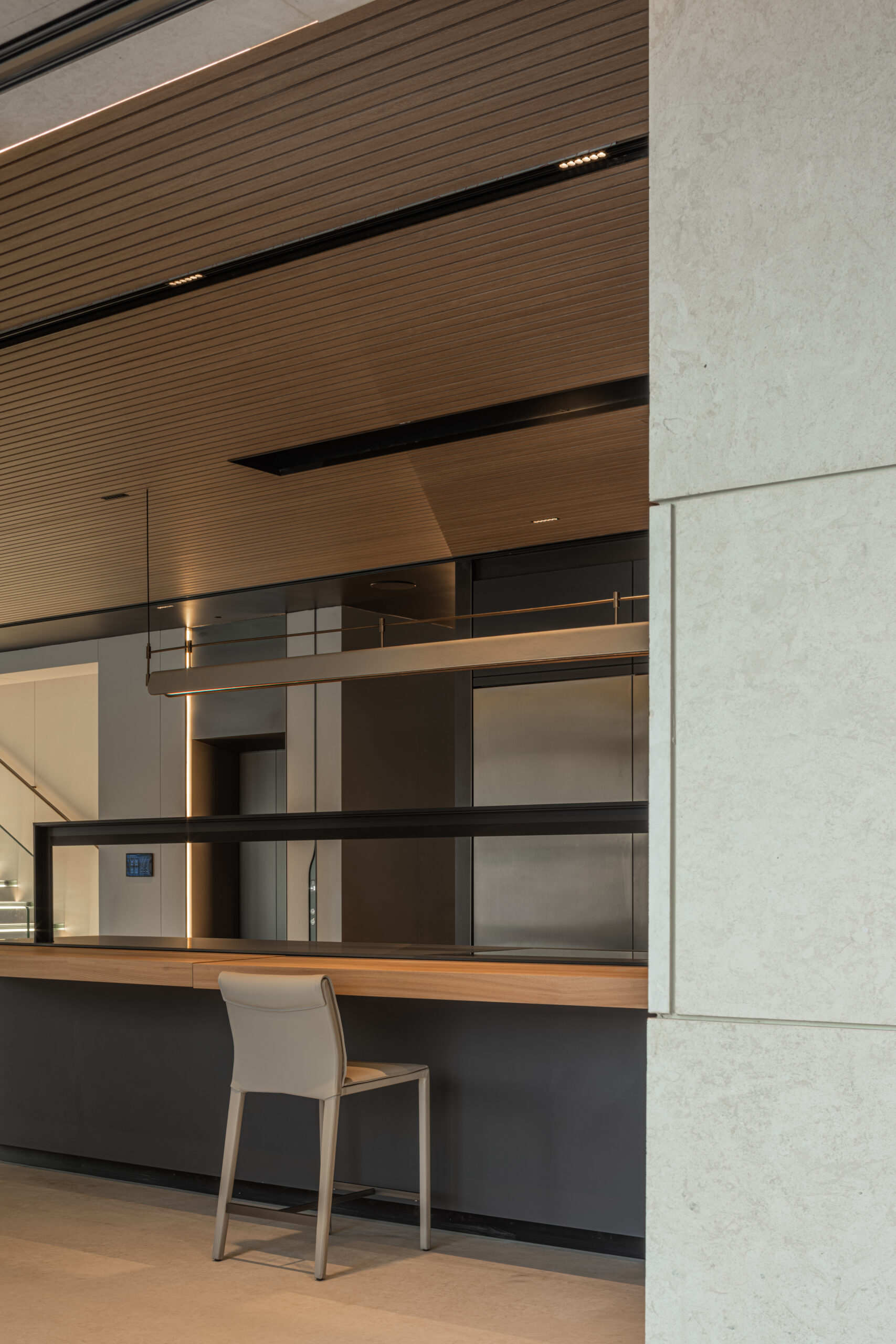
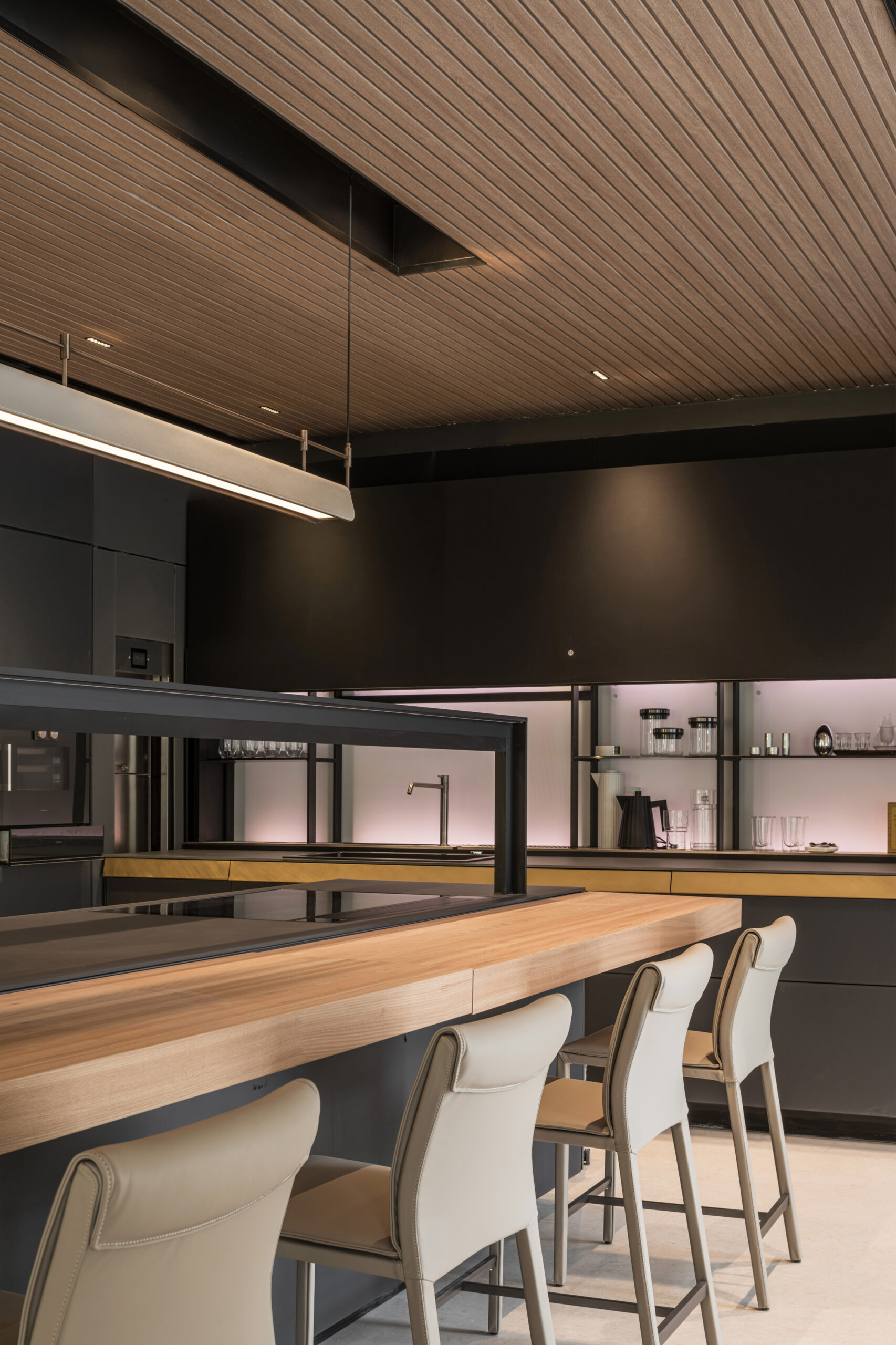
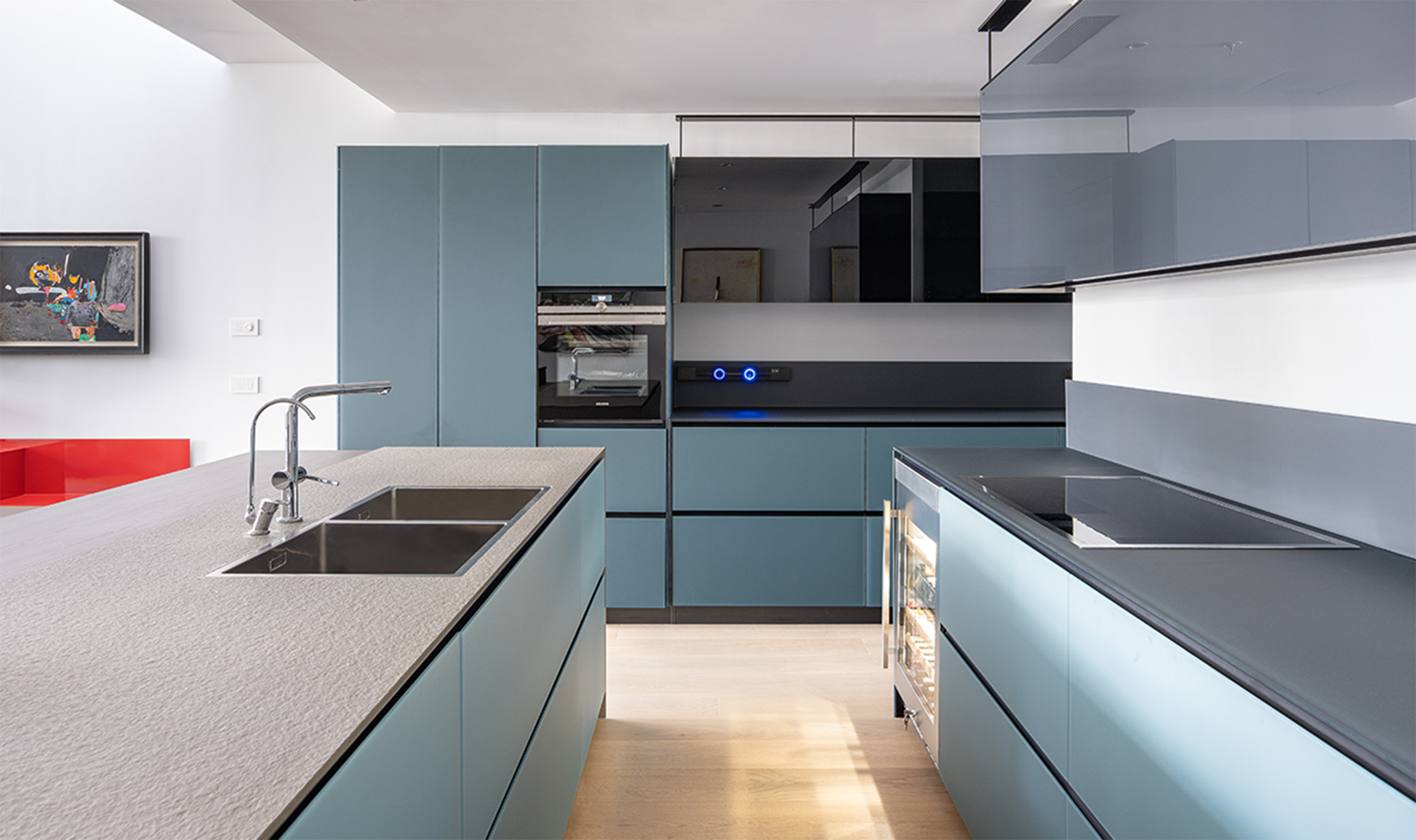
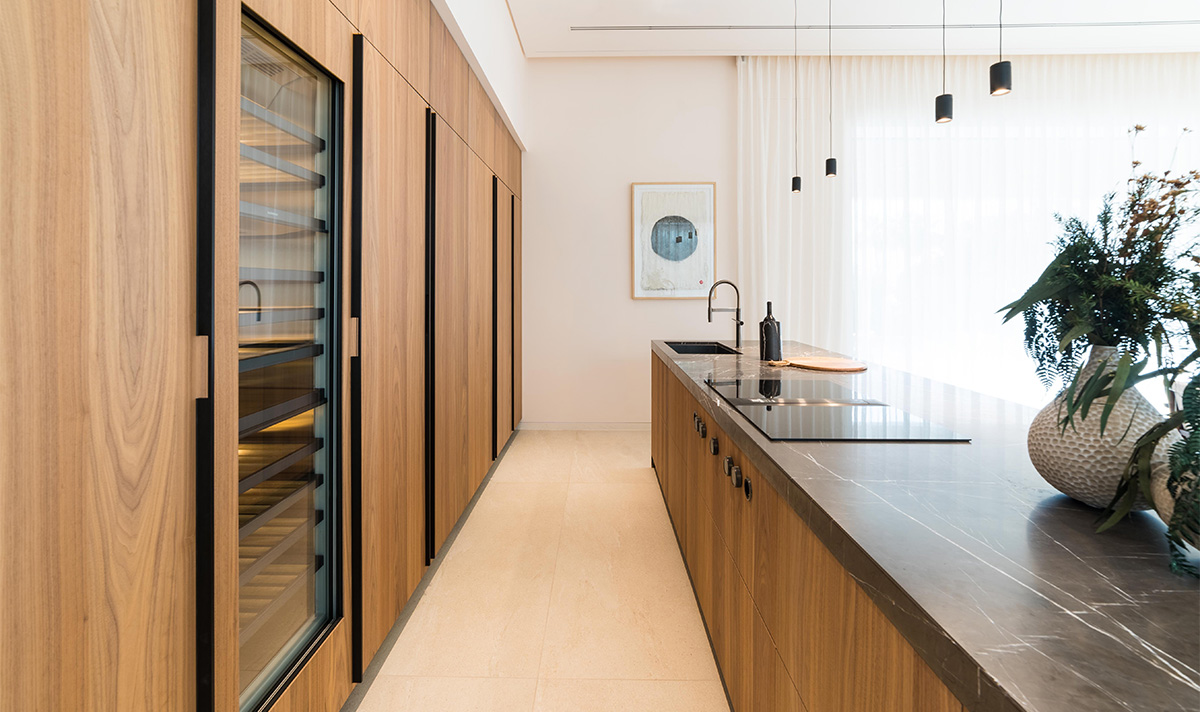
Vitrum Matt Black with a soft-touch finish was selected for all surfaces, capable of absorbing light and reducing visual noise, allowing the villa's essential elements to emerge: the continuity of limestone, the reflections of water and the landscape framed by glazed surfaces.
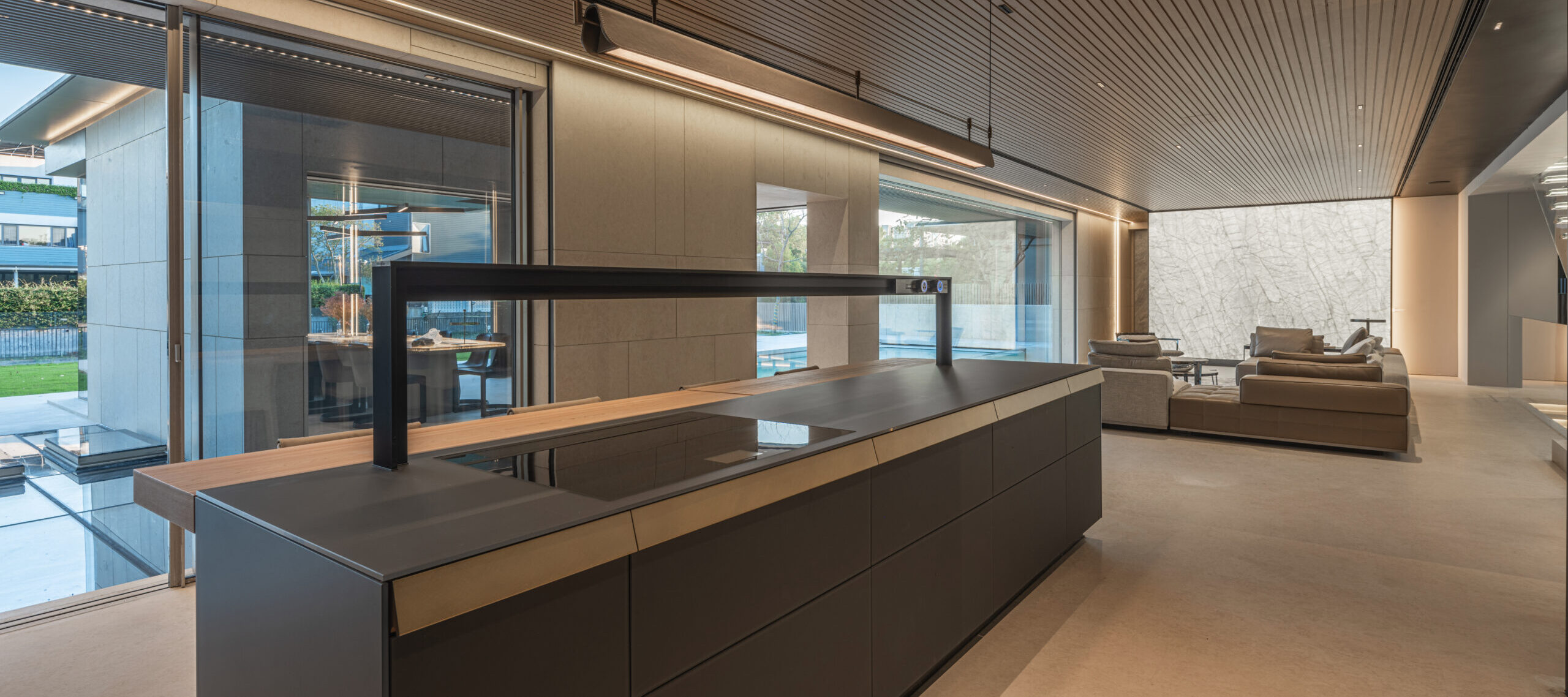
The kitchen therefore appears as a monolithic and rigorous volume, designed to accompany daily life without ever imposing itself visually. Every element contributes to creating a sense of continuity through a design approach focused on control, precision and material coherence.
The island is conceived as a space dedicated to sharing: a generous surface designed for preparing food, meeting, lingering and conversing, in harmony with the villa's convivial atmosphere. Integrated into the island, the Accessory Rack keeps tools and accessories always within reach without compromising the purity of the geometries.
The integration between kitchen and domestic architecture is further reinforced by the Air Logica Special Element, which conceals the operational area when the kitchen is not in use. The continuity of the finish, also echoed in the wall panelling, transforms the composition into a fluid and coherent architectural surface, perfectly integrated with the rest of the house.
Kitchen and elegance of disappearing elements
The pursuit of calm and continuity reaches its most sophisticated expression in the concealed elements: integrated shelving, fully hidden tower units dedicated to ovens and refrigerator, and conceal systems that preserve functionality while remaining visually discreet.
It is an evolved form of craftsmanship in which technical complexity disappears, leaving space for the serenity of the environment. The kitchen delivers high performance, yet what remains perceptible above all is clarity: a continuous surface, a measured rhythm, a silent presence.
Technology follows the same design philosophy. The kitchen belongs to the villa's smart ecosystem: innovation supports comfort and functionality without ever becoming an ostentatious feature. Everything is designed to feel natural, fluid and intuitive.
In Villa 49, the kitchen becomes far more than an operational space. It is an everyday architecture of conviviality: essential, tailored and deeply integrated into the continuity of the home, designed to transform everyday gestures into a harmonious experience.
Interior design and project by Kris Lin International Design (KLID)
Ph credit by Zhu Hai