Between nature and design intelligence in South Africa
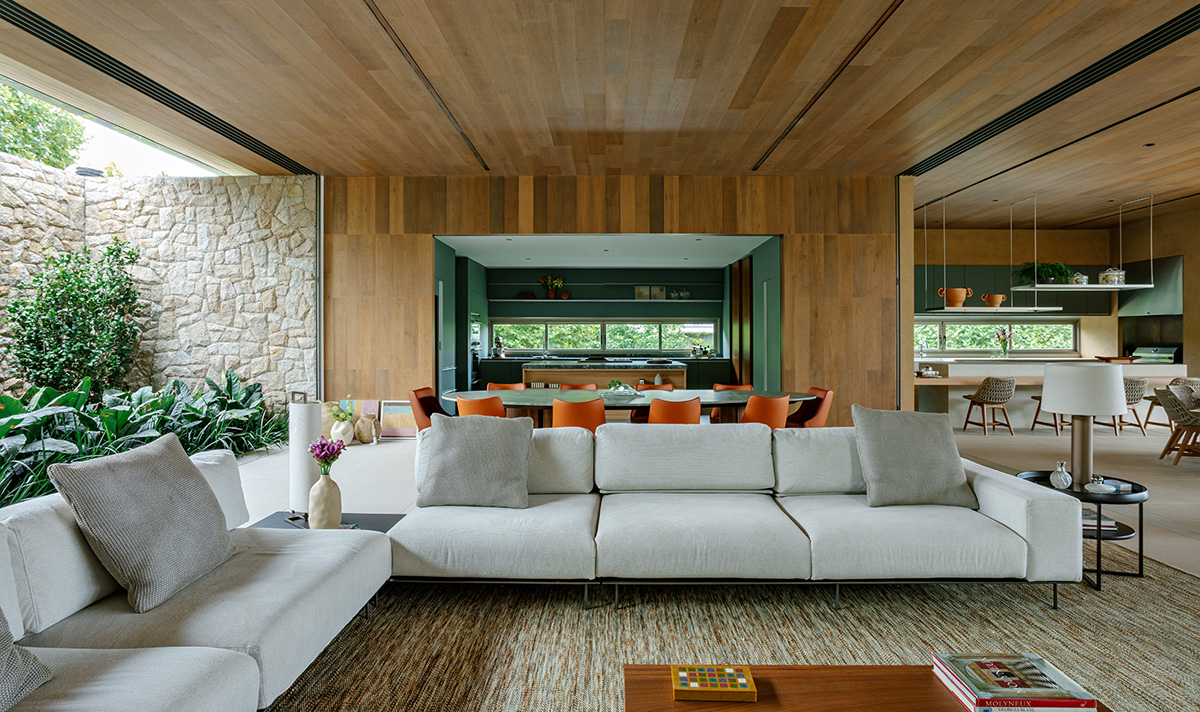
Set within a private coastal nature reserve between Hermanus, renowned for whale watching, and the southern tip of Africa, where the Atlantic and Indian Oceans meet, this home was conceived to amplify its dialogue with the horizon. Natural light flows through the interiors from early morning to late afternoon, while the architecture remains deliberately understated: white surfaces, pale timber ceilings, and deep perspectives create a neutral backdrop that lets the landscape take centre stage.
As the architects at Neo Architects, who led the project, observe: “The house is oriented to enjoy sea views from almost every angle, even from the entrance, while skylights bring abundant natural light.”
The owners, European clients recently retired, spend around eight months a year in South Africa. Their brief was clear: a home that conveys calm and order, where the natural dimension and the technological one coexist with restraint. In the kitchen, this translates into essential choices, high performance, and functionality designed to make everyday gestures immediate.
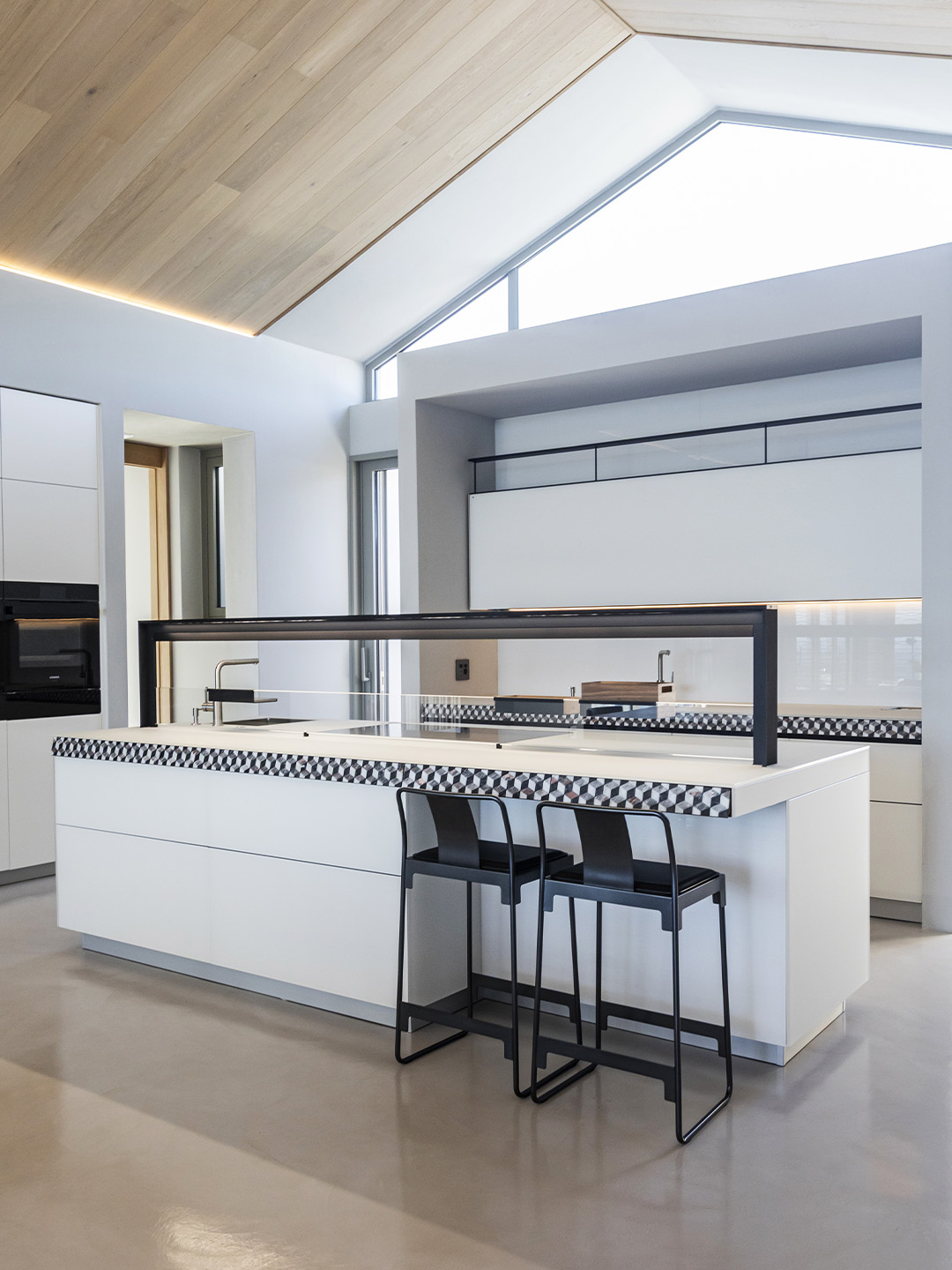
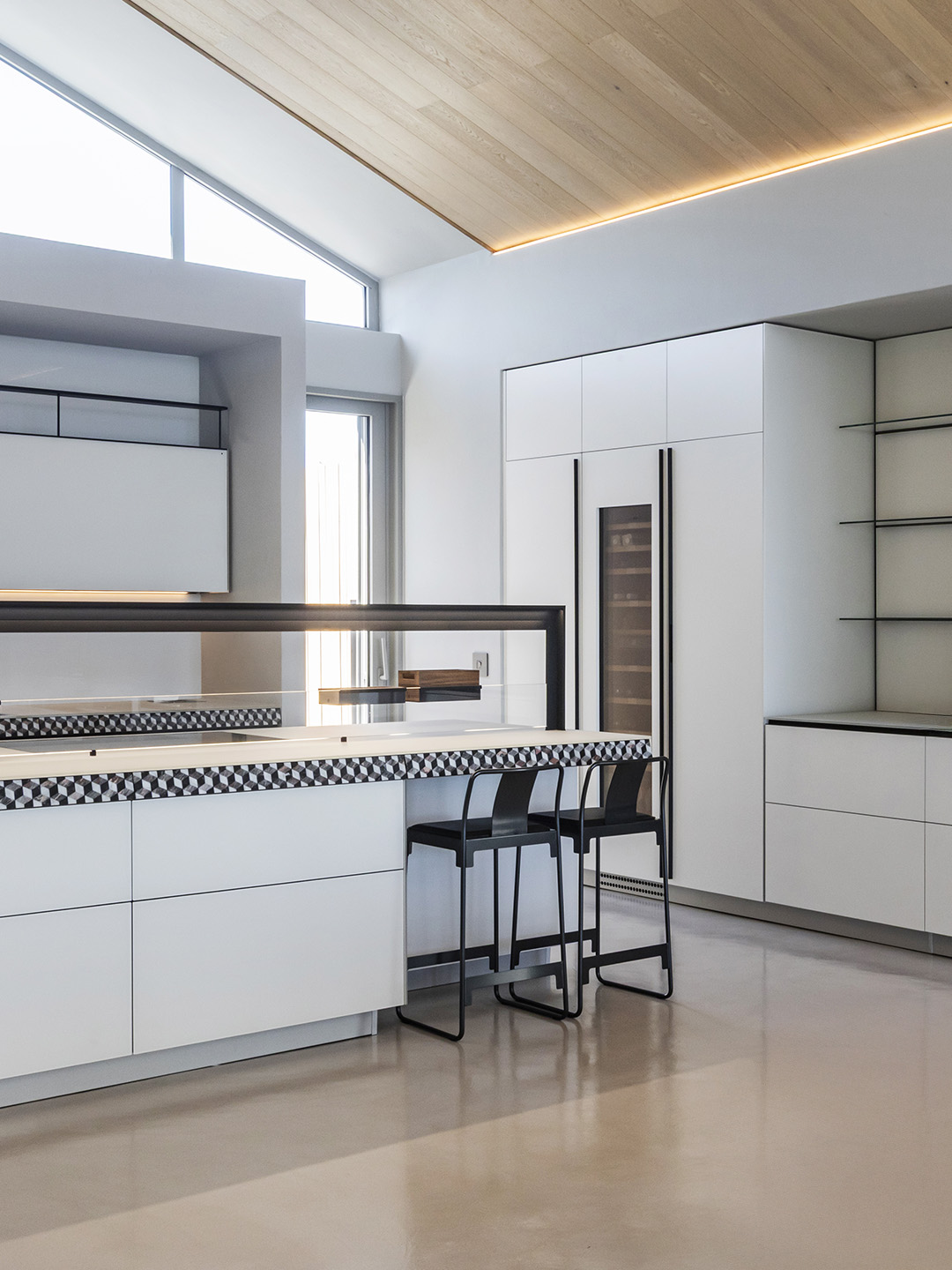
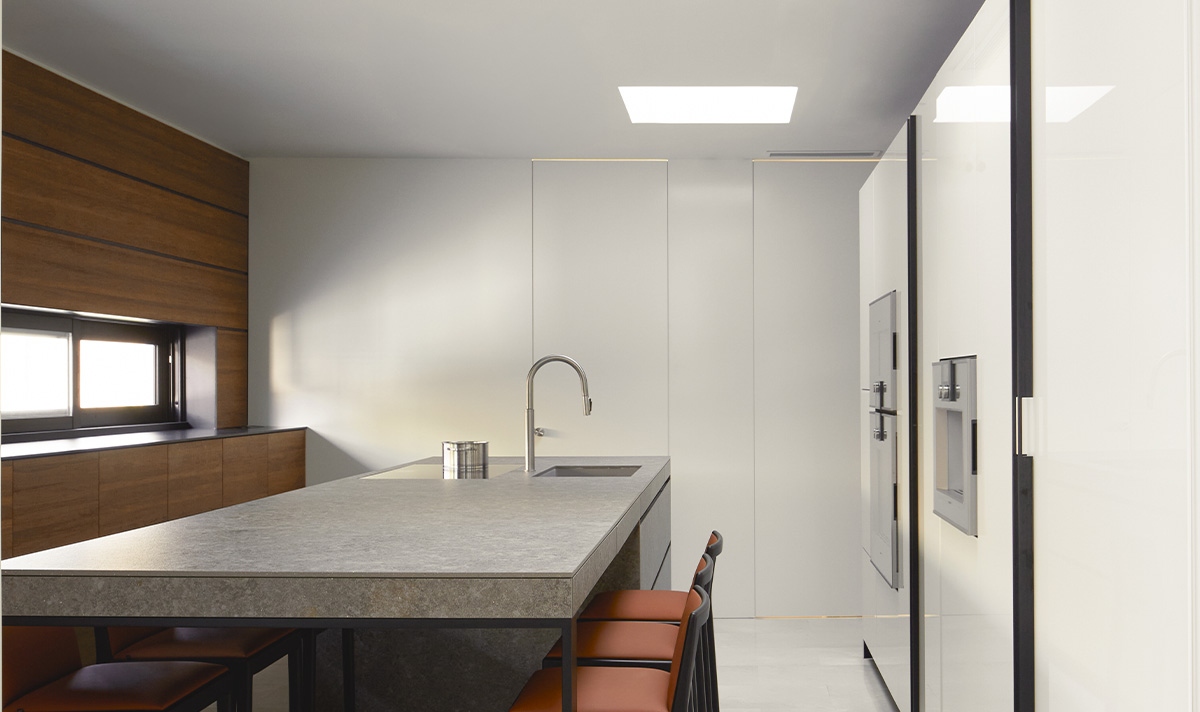
The local dealer Valcucine Cape Town | The Excellence Group interpreted the space as an open plan organised around the island, where operational activities and moments of connection converge. The hob is positioned on the island so cooking can take place with an uninterrupted view of the ocean, turning meal preparation into an immersive experience within the landscape.
The island reads as a pure volume in Pure White Glass, chosen to harmonise with the home's luminous palette and its coastal setting. A crisp, radiant gesture, defined by two iconic Valcucine elements: the Accessory rack and the Genius Loci drawer with the “Marble Cubes” craftsmanship finish.
The Accessory rack introduces an advanced functional dimension: an integrated system of accessories that makes the island a complete work area, while defining the space with a light, continuous line—one that separates without ever enclosing.
The Genius Loci drawer with the “Marble Cubes” craftsmanship finish adds a more intense material note. From a distance it appears as a measured graphic mark; up close it reveals a texture articulated by small modules and veining, making the surface vibrant and never static. Beyond characterising the island, it integrates generous, highly functional storage. The drawer band crosses the volume to introduce a refined contrast: the island's white engages with the black-and-white marble, while the black Accessory rack establishes a further visual layer, essential and decisive.
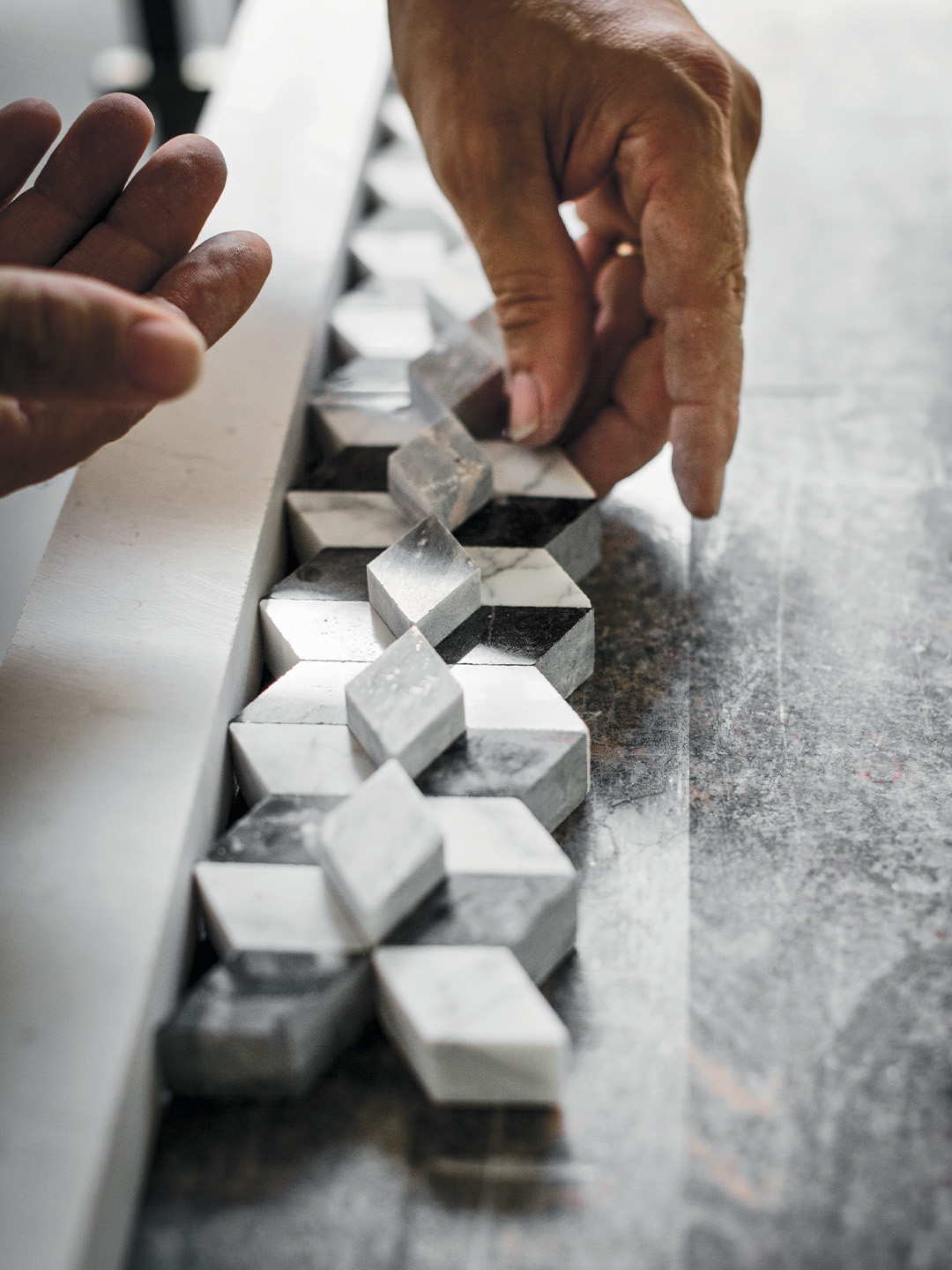
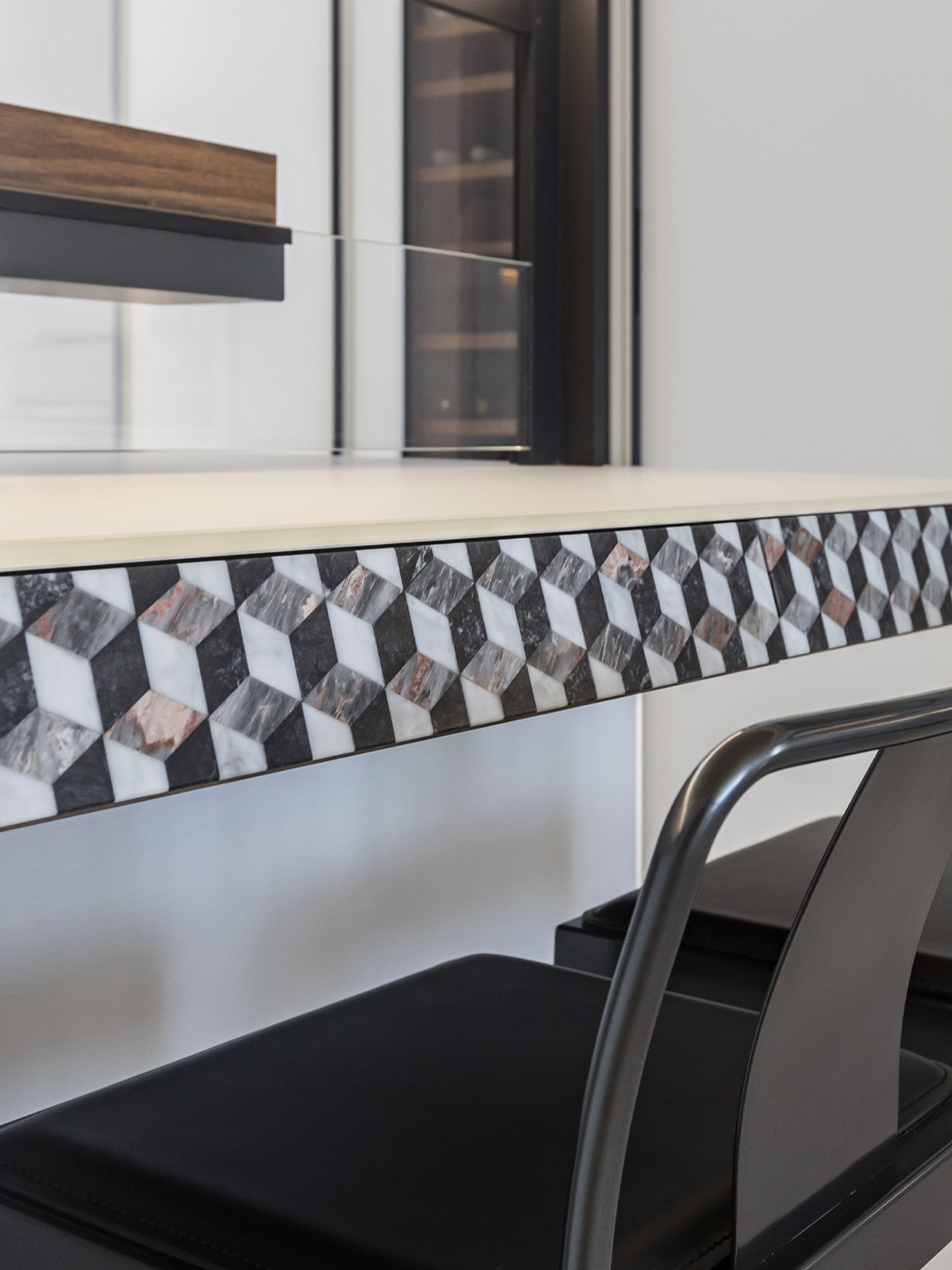
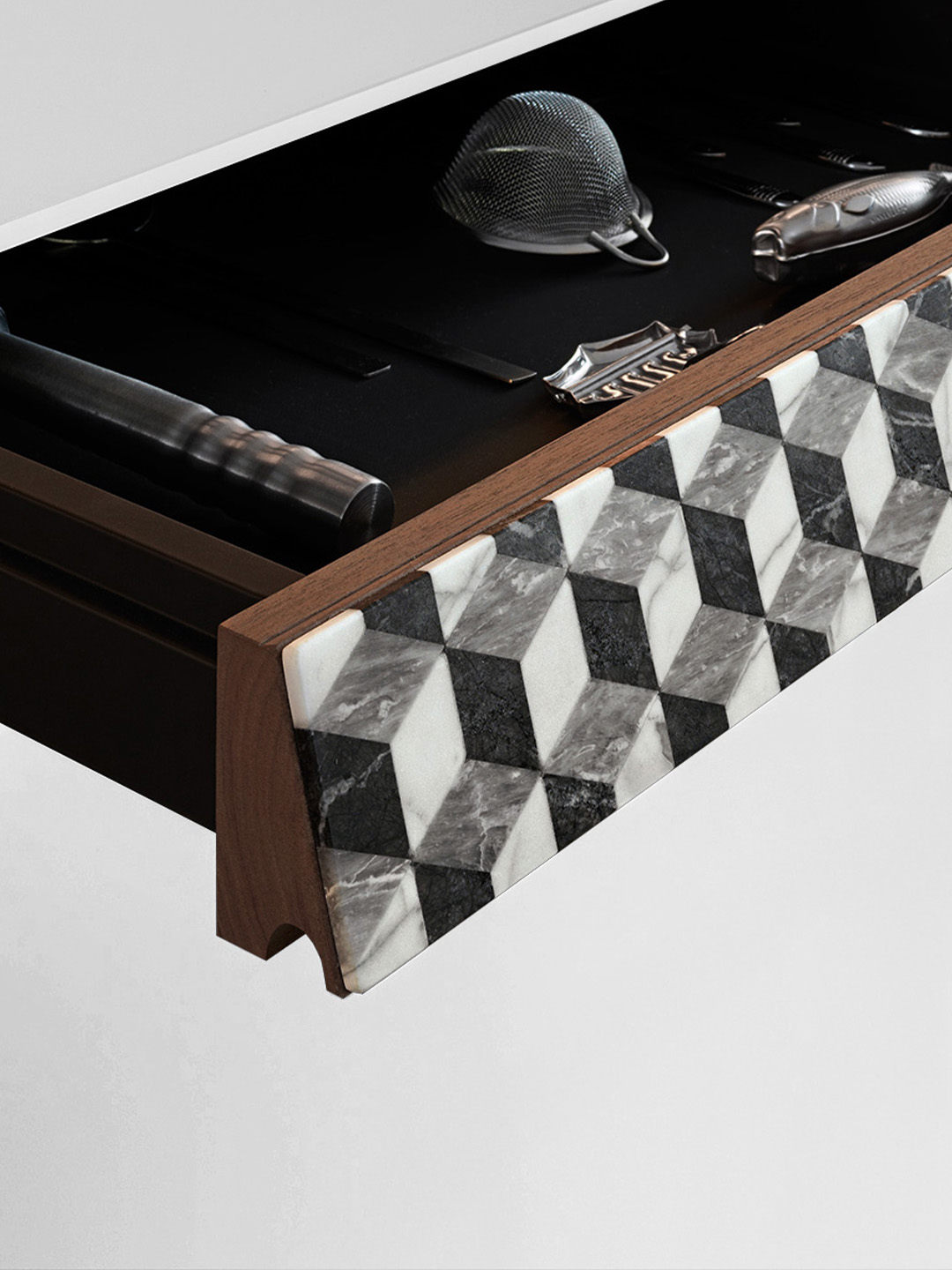
Marble Cubes craftsmanship: when marble becomes a narrative
Here, Valcucine craftsmanship is expressed through detail. The marble insert in the Genius Loci drawer front is created through high-precision workmanship: small cubic modules, calibrated and placed in a steady rhythm. Each cube is selected for chromatic and veining coherence, then finished to achieve a controlled balance between light and depth. The surface returns micro-reflections and natural variations, never repetitive, that shift with the movement of the sun and the viewer's distance.
Assembly is designed to be solid and durable, integrated into the drawer without weighing down the design. Marble is not an applied element, but an integral part of the construction: a contemporary artisanal gesture where technology ensures precision and the stone retains its uniqueness.
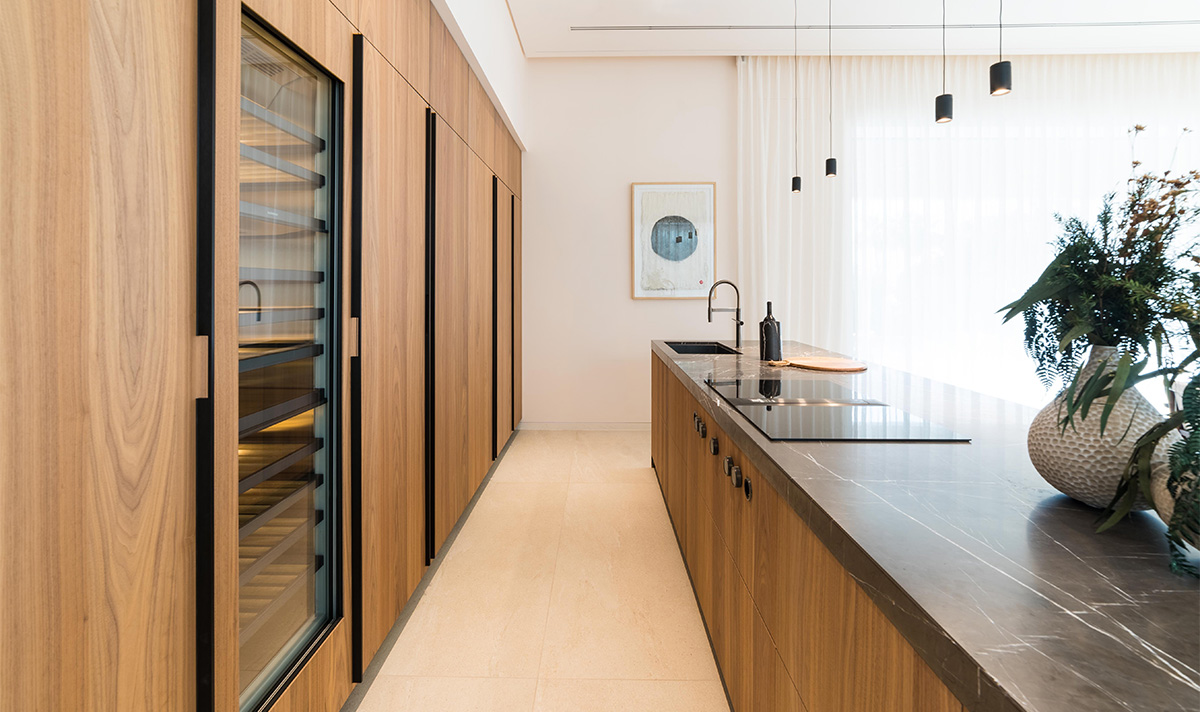
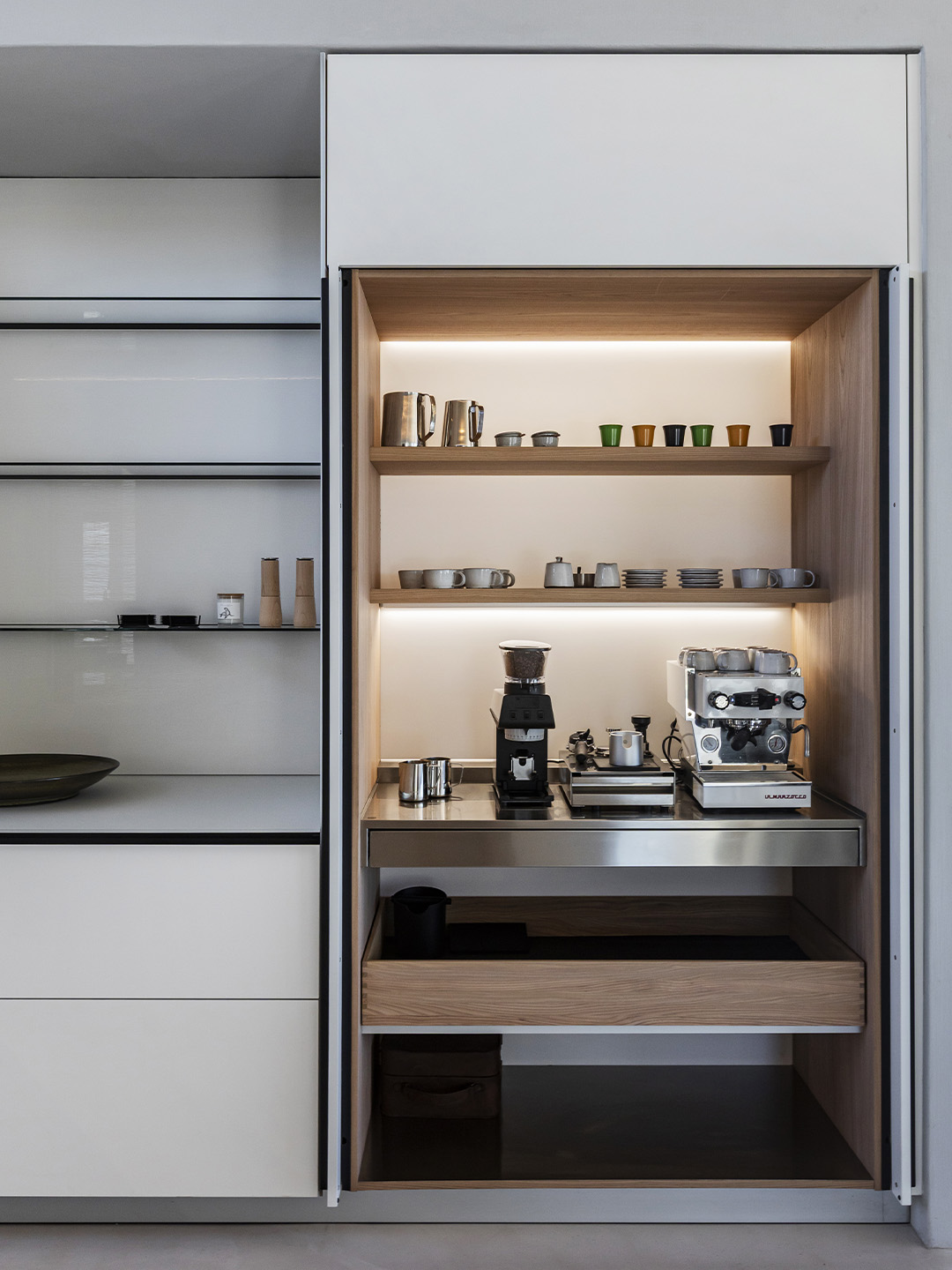
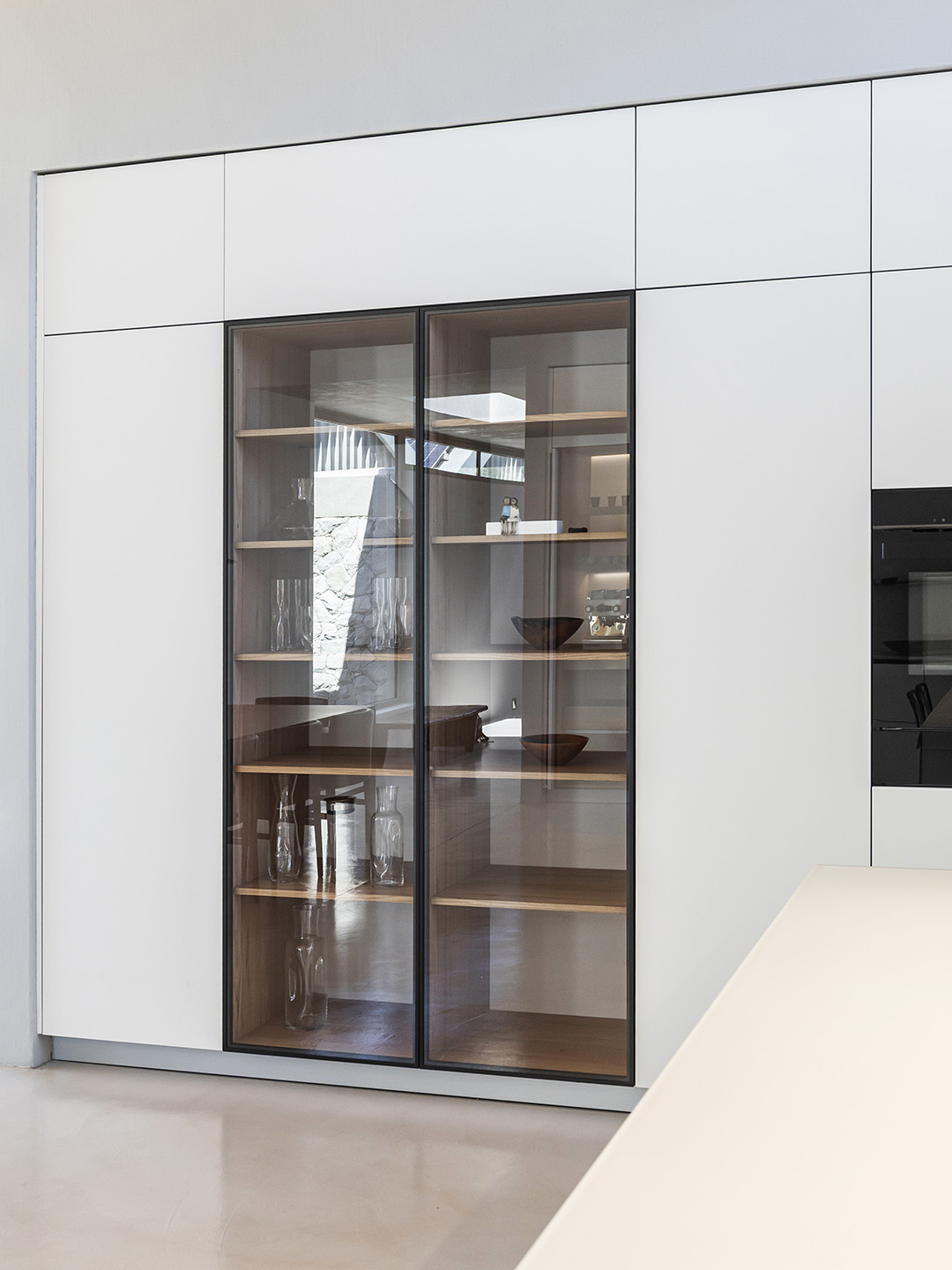
The storage design follows the same logic of discretion. Tower units with recessed doors sit flush within the architecture; the integrated ovens are absorbed into the rhythm of planes and surfaces, keeping the overall composition ordered. Beside them, a display cabinet with a Techne door in transparent glass introduces a warmer note through elm interiors and soft lighting, while a tower unit with recessed doors conceals a fully integrated coffee station: a generous, scenographic element that remains hidden when not in use and is revealed as needed—without disrupting the room's clean lines.
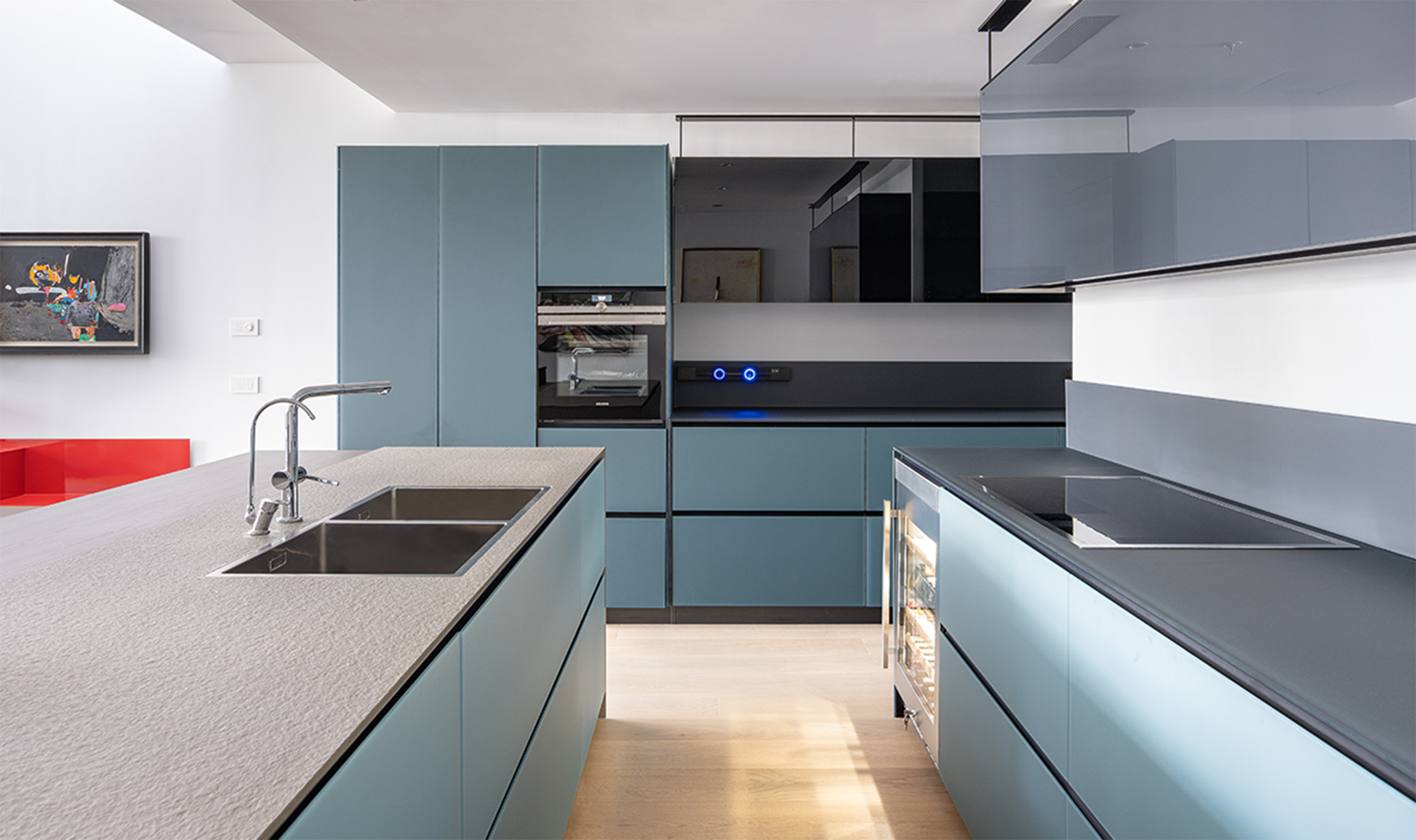
On the rear wall, the Aerius wall unit completes the composition with a light, suspended presence. The Vitrum Tattile “Sea Breeze” finish—chromatically continuous with Pure White Glass—adds a subtle sensory dimension: a surface that holds light softly and delivers a more tactile, almost velvety effect, while maintaining the same formal clarity.
In this project, every choice responds to a coherent idea of essentiality: leaving space for light, landscape, and everyday gestures, integrating technology in a quiet way. A kitchen that avoids unnecessary emphasis and builds lasting value over time—through authentic materials, precise craftsmanship, and an order that makes living feel more natural and conscious.
Ph credits by Ryan Abbott