
Invitrum base units
A forward-looking design
With the Invitrum base unit system, Valcucine has developed a solution based on the use of glass and aluminium, designed according to principles that have always guided the company’s research: reducing the amount of material used, employing recyclable materials, eliminating adhesives from joints, and designing for disassembly. These choices shape the very structure of the product, with the aim of using resources more efficiently and facilitating the separation of materials at the end of its life cycle.
Design by Gabriele Centazzo
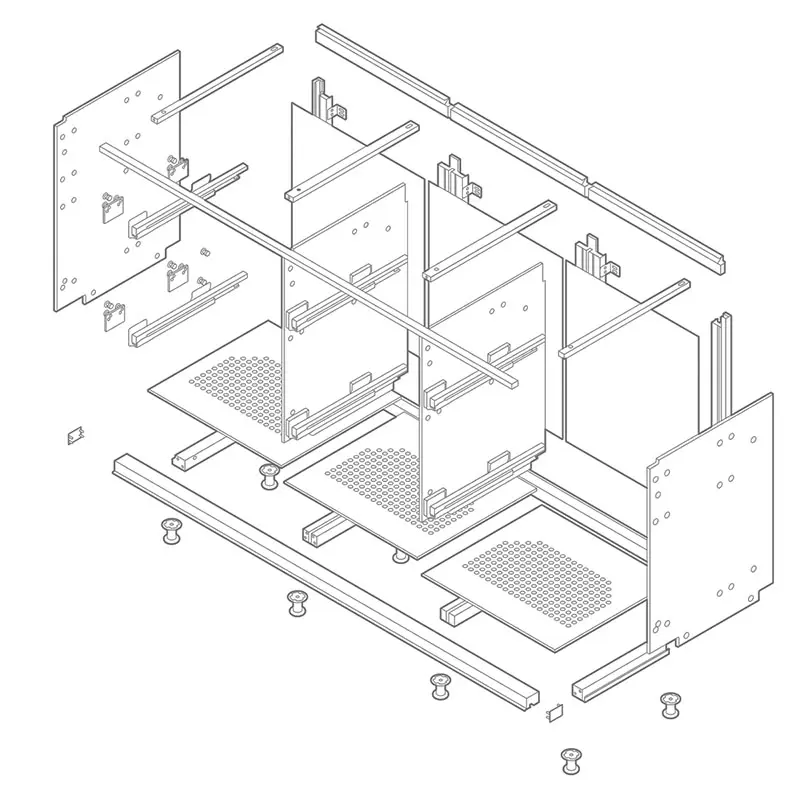
Dematerialisation: a single glass side panel
Patented in 2009, the Invitrum base unit system was designed according to the principle of dematerialisation, reducing the amount of material used. The single glass side panel, just 10 mm thick, avoids doubling the two side panels normally found between adjoining base units. This solution reduces the amount of material used for the side panels by 73%.*
Recyclable materials: glass and aluminium
The Invitrum structure is based on the use of glass and aluminium, both recyclable materials. The choice of materials is combined with a design approach that considers the subsequent separation of components from the outset.
Mechanical joints without adhesives
The structural elements are assembled using mechanical joints, without the use of adhesives. This design choice reflects Valcucine’s commitment to the quality of the materials used in domestic environments. Mechanical joints also facilitate the separation of the different components at the end of the product’s life cycle.
Designed for disassembly
Considering a product as a potential source of material means designing it with what will happen at the end of its life cycle in mind. Invitrum is designed for disassembly: its mechanical joints allow the different components to be separated, facilitating the sorting of glass and aluminium during the subsequent recovery and recycling stages.
*The percentage is based on a comparison between the specific solution described and the traditional configuration used as a reference. The calculation method and supporting data are available in the company’s technical documentation.